Quotessence
Home / Quotes / Quote by Sadhu Sundar Singh

Quote by Sadhu Sundar Singh

“Water and petrol both come from the earth, and though they seem to be alike and even the same, they are in nature and purpose exact opposites, for the one extinguishes fire and the other adds fuel to it. So also the world and its treasures, the heart and its thirst for God are alike His creation. Now the result of the attempt to satisfy the heart with the wealth and pride and honours of this world is the same as if one tried to put out a fire with petrol, for the heart can only find ease and satisfaction in Him who created both it and the longing desire of which it is conscious.”

Quote by Sadhu Sundar Singh

Author
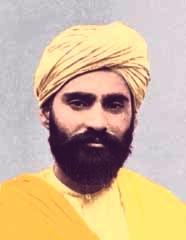
Sadhu Sundar Singh
Sadhu Sundar Singh

Sadhu Sundar Singh was an Indian missionary, born on September 3, 1889, and died in 1929. He was an Indian Hindu who later became a Christian and dedicated his life to spreading Christianity in India. more

You May Also Like

“We are a material-mad race of people. Build, increase, expand, pile up, hoard! More and more and more. "If we can just make enough money to-to- !" Jesus said: "Sell what ye have, and give alms; provide yourselves bags which wax not old, a treasure in the heavens that faileth not, where no thief approacheth, neither moth corrupteth."”

“Wild animals never kill for sport. Man is the only one to whom the torture and death of his fellow creatures is amusing in itself.”

“We are determined not to take as the aim of our life fame, profit, wealth, or sensual pleasure, nor to accumulate wealth while millions are hungry and dying. We are committed to living simply and sharing our time, energy, and material resources with those who are in need.”

“We did not choose to believe that personal choice is the highest human virtue. Rather, we were taught, formed, forced to believe nothing is important in life other than that which we have personally chosen. The irony is that the belief that nothing is important in life other than that which we have personally chosen is a belief that we have not personally chosen! The supermarket and shopping mall have been our school.”

“We had learned how to invent things, and the question of why we invent things receded in importance. The idea that if something could be done it should be done was born in the nineteenth century. And along with it, there developed a profound belief in all the principles through which invention succeeds: objectivity, efficiency, expertise, standardization, measurement, and progress. It also came to be believed that the engine of technological progress worked most efficiently when people are conceived of not as children of God or even as citizens but as consumers-that is to say, as markets.”

“We have created new idols. The worship of the ancient golden calf (cf. Ex 32:1-35) has returned in a new and ruthless guise in the idolatry of money and the dictatorship of an impersonal economy lacking a truly human purpose. The worldwide crisis affecting finance and the economy lays bare their imbalances and, above all, their lack of real concern for human beings; man is reduced to one of his needs alone: consumption.”

“We must surely appear to the world as exactly what we are: a nation that organizes its economy around consuming twice as much oil as it produces, and around the profligate wastefulness of the wars and campaigns required to defend such consumption. In recent years we have defined our national interest largely in terms of the oil fields and pipelines we need to procure fuel.”

“We, all of us in the First World, have participated in something of a binge, a half century of unbelievable prosperity and ease. We may have had some intuition that it was a binge and the earth couldn't support it, but aside from the easy things (biodegradable detergent, slightly smaller cars) we didn't do much. We didn't turn our lives around to prevent it. Our sadness is almost an aesthetic response - appropriate because we have marred a great, mad, profligate work of art, taken a hammer to the most perfectly proportioned of sculptures.”