“The fabric of American empire ought to rest on the solid basis of THE CONSENT OF THE PEOPLE. The streams of national power ought to flow from that pure, original fountain of all legitimate authority.”
Quote by Alexander Hamilton
Work
The Federalist: With Letters of Brutus
This book is a compilation of essays and letters that delve into the debate over the ratification of the United States Constitution. It includes the influential essays written by Alexander Hamilton, James Madison, and John Jay, collectively known as The Federalist Papers, as well as responses from a fictional character named Brutus, offering a dissenting viewpoint. more
Author
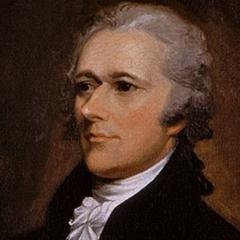
Alexander Hamilton
Alexander Hamilton was a Founding Father of the United States, born on January 11, 1757, and died on July 12, 1804. He played a crucial role in the American Revolutionary War and was instrumental in the drafting of the U.S. Constitution. As the first Secretary of the Treasury, Hamilton promoted fiscal stability and economic growth, establishing the First Bank of the United States and proposing solutions for federal debt. His ideas and policies had a profound impact on the early political and economic development of the United States. more
You May Also Like
Source: The works of Alexander Hamilton; compris. his corresp. and his polit. and official writings, excl. of the federalist, civil and military. Ed. by John C. Hamilton
“Here sir, the people govern.”
Source: Selected writings and speeches of Alexander Hamilton
Source: The Works of Alexander Hamilton: Miscellanies, 1774-1789: A full vindication; The farmer refuted; Quebec bill; Resolutions in Congress; Letters from Phocion; New-York Legislature, etc
Source: The Federalist: A Commentary on the Constitution of the United States
Source: The Essential Federalist: A New Reading of the Federalist Papers
Source: Light and Liberty: Reflections on the Pursuit of Happiness
“[The people] are in truth the only legitimate proprietors of the soil and government.”
“The ultimate arbiter is the people of the Union.”
Source: Memoir, correspondence, and miscellanies from the papers of T. Jefferson
Source: The Fœderalist: A Collection of Essays, Written in Favor of the New Constitution, as Agreed Upon by the Fœderal Convention, September 17, 1787. Reprinted from the Original Text. With an Historical Introduction and Notes