Quotessence
Home / Quotes / Quote by Herman Melville

Quote by Herman Melville

Work

Herman Melville's Moby-Dick

Moby-Dick is a profound and complex narrative that delves into the psychological and philosophical depths of its characters. Set in the 19th century, the story follows the crew of the Pequod on a perilous journey across the Pacific Ocean. The novel is renowned for its rich language, intricate symbolism, and its exploration of themes such as the nature of evil, the role of fate, and the human struggle against overwhelming forces. more

Author
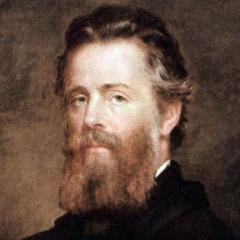
Herman Melville
Herman Melville

Herman Melville was a renowned 19th-century American novelist known for his profound psychological descriptions and unique literary style. His masterpiece, 'Moby-Dick', is considered a classic of American literature. more

You May Also Like

“The tension of a mysterious danger is even more unbearable than danger itself. People hate the vacuum of an unknown situation. They want security. They even prefer war to the insecure expectation of a war with its threat of enemy surprise. This vague fearful expectation acts on their fantasies. They anticipate all kinds of mysterious dangers; they begin to provoke them. It is the evocation of fear and danger in order to escape the tension of insecurity.”

“The danger of education, I have found, is that it so easily confuses means with ends. Worse than that, it quite easily forgets both and devotes itself merely to the mass production of uneducated gradtuates - people literaly unfit for anything except to take part in an elaborate and completely artificial charade which they and their contemporaries have conspired to call "life".”

“To discover the true principles of morality, men have no need of theology, of revelation, or of gods. They need but common sense. They have only to look within themselves, to reflect upon their own nature, to consult their obvious interests, to consider the object of society and of each of the members who compose it, and they will easily understand that virtue is an advantage, and that vice is an injury to beings of the species.”