“I am no poet, but if you think for yourselves, as I proceed, the facts will form a poem in your minds.”
Quote by Michael Faraday
Work
The Life and Letters of Faraday
This book offers an in-depth look into the life and work of Michael Faraday, a pivotal figure in the field of electromagnetism. It includes extensive letters and correspondence, providing insight into Faraday's scientific thought process and personal life. more
Author
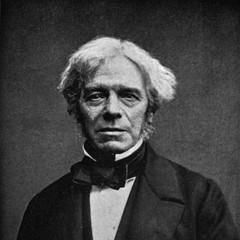
Michael Faraday
Michael Faraday was an English physicist and chemist, born on September 22, 1791, and died on August 25, 1867. He made significant contributions to the field of electromagnetism, particularly the discovery of electromagnetic induction, which had a profound impact on the development of the electric power industry and electrical engineering. more
You May Also Like
Source: Conversations on the Craft of Poetry
Source: Some speculations on literature, history, and religion
Source: Some speculations on literature, history, and religion
“Poetry is the mother-tongue of the human race.”
Source: Writings on Philosophy and Language
Source: The lives of the most eminent English poets, with critical observations on their works
“Still may syllables jar with time, Still may reason war with rhyme, Resting never!”