Quotessence
Home / Quotes / Quote by Nate Lowman

Quote by Nate Lowman

“For me, Corsica is a place that I visited with my friends, maybe five or six times over the years, and I'm so happy there that I wanted to make a painting about it almost just to share with my friends, but it's so difficult when all your feelings are one way, and they're very sort of happy and pleasant. It's impossible to make a painting about it.”

Quote by Nate Lowman

Author
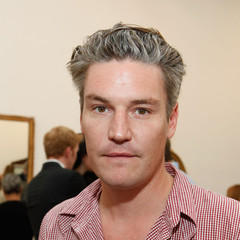
Nate Lowman
Nate Lowman

Nate Lowman, born in 1979, is a mysterious artist whose work style is unique, blending various art forms such as painting, sculpture, and installation art. Although his personal life remains largely unknown, his artistic achievements have gained international recognition. more

You May Also Like

“The importance of the term "genocide" for many Indigenous Peoples is that it is more than a term or an accusation; it is a word created in the wake of the Shoah in Europe to describe what happens when a people are targeted by a government for extermination, as were the Jews of Europe, and which is the term used in the most important international law related to concerned Indigenous Peoples, as the only international human rights law that pertains specifically to collectivities of people rather than individuals.”

“The term "genocide" is often incorrectly assumed to mean extreme examples of mass murder associated with war, with the death of millions of individuals, as, for instance in Cambodia. Although clearly the Holocaust was the most extreme of all genocides, the bar set by the Nazis is not the bar required to be considered genocide. Most importantly, genocide does not have to be complete to be considered genocide.”

“In the present, the way benevolence is expressed is in conceptualizing the Native as a historical relic; US people have to be constantly reminded that there are still existent Indigenous peoples and communities in North America, but whether left or right, recent immigrant or descendants of settlers, even descendants of enslaved Africans, the Native presence is not a consideration in the day to day life of individuals and municipal, state and national governments.”