Quotessence
Home / Quotes / Quote by Peter Jacobson

Quote by Peter Jacobson

“People would stop me in the street - my demographic tends to be the elderly Jewish women from Miami; I think they tend to fancy me as someone that would've been good with their daughter or something - and a lot of them will do the wrist-slapping thing. "Oh, you're a terrible man! Just terrible!" And I'm, like, "Well, it's just a show. I'm just playing a character."”

Quote by Peter Jacobson

Author
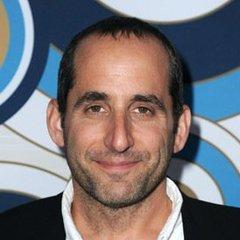
Peter Jacobson
Peter Jacobson

Peter Jacobson, born on March 24, 1965, is an American actor known for his roles in various television shows and films. He gained widespread popularity for his portrayal of Dr. George O'Malley on the hit TV series 'Grey's Anatomy'. more

You May Also Like

“If you do an episode about something like transverse myelitis, it's a real disease that's out there, there are a lot of people that have it, and it's hard to get funding for them because people don't know about it. There are actually a lot of doctors that don't know about it. But if you do an episode of House, all of a sudden 15 million people are hearing the words, and it's an opportunity.”

“When you're spending that much time by yourself in your car looking at landscapes, it's desolate. Most of the other people around you are invisible in their own cars. You're driving past houses where maybe once in a while somebody is out, but that's about it. So I was interested in that aesthetic and I decided I wanted to write an apocalyptic narrative, but the more I thought of it, it seemed bizarre and untenable to me to pick one, so I just didn't.”

“So many of the stories are about perspective and viewpoint. It's not just about seeing and revelation. The idea of having many different stories from many different perspectives has something to do with me trying to deal with the impossibility of having a wide enough view to say anything really convincing on that scale.”

“A lot of times when I ask people what their apocalyptic fantasy life is like, they'll immediately say something like, "Oh, what I think is going to kill us is climate change or World War IV," and that's not what I'm interested in at all. The point is not about winning a bet about what's going to happen. The point is about the human action of examining the possibility, the kind of obsessive imagining about it.”

“I think we are living in an era of being hyper-concerned about, Is it us? Because we have this historical awareness. People really want to know: will it be us or our kids or our grandkids to live through this? We don't want it to happen, we don't want to be the ones with the poisoned water, but at the same time, I think there is this curiosity, like, Am I one of the "lucky" ones who gets to be here at the end? That's the tension I'm interested in.”

“I decided to make myself a little less precious with my storytelling. I think you can see from the first three pieces in the book that I have a long term relationship with the short story as a form and I really love an elegantly crafted story that has several elements that come together in a way that is emotionally complex and different from when we started. That kind of crystalline, perfect, idealized thing that the short story as a genre has come to represent.”