“It will be proper to take a review of the several sources from which governments have arisen, and on which they have been founded.”
Quote by Thomas Paine
Work
The Thomas Paine Collection: Common Sense, Rights of Man, Age of Reason, An Essay on Dream, Biblical Blasphemy, Examination Of The Prophecies
This collection brings together several key writings by Thomas Paine, a prominent figure of the Enlightenment era. It includes 'Common Sense,' which argued for American independence from British rule; 'Rights of Man,' a defense of the French Revolution and critique of monarchy; 'The Age of Reason,' a deistic examination of organized religion and the Bible; 'An Essay on Dream,' a short piece on the nature of dreams; 'Biblical Blasphemy,' a critical analysis of biblical texts; and 'Examination of the Prophecies,' a scrutiny of biblical prophecies. The volume offers readers access to Paine's rationalist and revolutionary ideas that influenced political and religious thought in the late 18th century. more
Author
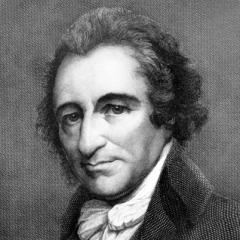
Thomas Paine
Thomas Paine, born on February 9, 1737, and died on June 8, 1809, was a prominent American writer, political figure, and philosopher during the American Revolutionary War. He is renowned for his radical democratic ideas and his contributions to the American independence movement. more
You May Also Like
Source: The Political Writings of Thomas Paine ...: Prospects on the Rubicon. Rights of man, part I. Rights of man, part II. Letter to the authors of the Republican. Letter to the Abbe Sieyes. Address to the addressers. Letters to Lord Onslow. Dissertation on the first principles of government. Speech delivered in the French National convention. Letter to Mr. Secretary Dundas. The decline and fall of the English system of finance. Letter to the people of France. Reasons for preserving the life of Louis
“The first was a government of priestcraft, the second of conquerors, and the third of reason.”
Source: The Political Writings of Thomas Paine ...: Prospects on the Rubicon. Rights of man, part I. Rights of man, part II. Letter to the authors of the Republican. Letter to the Abbe Sieyes. Address to the addressers. Letters to Lord Onslow. Dissertation on the first principles of government. Speech delivered in the French National convention. Letter to Mr. Secretary Dundas. The decline and fall of the English system of finance. Letter to the people of France. Reasons for preserving the life of Louis
Source: Complete Works
Source: The Age of Reason: Being an Investigation of True and Fabulous Theology
Source: The Theological Works of Thomas Paine
Source: The Works of Thomas Paine: A Hero in the American Revolution. With an Account of His Life ...
Source: Apology for the Bible: In a Series of Letters Addressed to Thomas Paine, Author of The Age of Reason
Source: The Writings of Thomas Paine