Quotessence
Home / Quotes / Quote by Charles Galton Darwin

Quote by Charles Galton Darwin

“The evolution of the human race will not be accomplished in the ten thousand years of tame animals, but in the million years of wild animals, because man is, and always will be, a wild animal.”

Quote by Charles Galton Darwin

Author
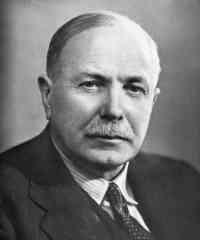
Charles Galton Darwin

Charles Galton Darwin was a British physicist born on December 18, 1887, and died on December 31, 1962. He was known for his significant contributions to the fields of quantum mechanics and nuclear physics. more

You May Also Like

“The great age of the earth will appear greater to man when he understands the origin of living organisms and the reasons for the gradual development and improvement of their organization. This antiquity will appear even greater when he realizes the length of time and the particular conditions which were necessary to bring all the living species into existence. This is particularly true since man is the latest result and present climax of this development, the ultimate limit of which, if it is ever reached, cannot be known.”

“The History of Evolution is the real source of light in the investigation of organic bodies. It is applicable at every step, and all our ideas of the correlation of organic bodies will be swayed by our knowledge of the history of evolution. To carry the proof of it into all branches of research would be an almost endless task. (1828)”

“The meaning that we are seeking in evolution is its meaning to us, to man. The ethics of evolution must be human ethics. It is one of the many unique qualities of man, the new sort of animal, that he is the only ethical animal. The ethical need and its fulfillment are also products of evolution, but they have been produced in man alone.”

“The scientific doctrine of progress is destined to replace not only the myth of progress, but all other myths of human earthly destiny. It will inevitably become one of the cornerstones of man's theology, or whatever may be the future substitute for theology, and the most important external support for human ethics.”

“The succession of individuals, connected by reproduction and belonging to a species, makes it possible for the specific form itself to last for ages. In the end, however, the species is temporary; it has no "eternal life." After existing for a certain period, it either dies or is converted by modification into other forms.”

“We do not draw conclusions with our eyes, but with our reasoning powers, and if the whole of the rest of living nature proclaims with one accord from all sides the evolution of the world of organisms, we cannot assume that the process stopped short of Man. But it follows also that the factors which brought about the development of Man from his Simian ancestry must be the same as those which have brought about the whole of evolution.”