“Recognizing and uniting with the universal therefore gives us the greatest aesthetic satisfaction, the greatest emotion of beauty. The more determinately (consciously) this recognition is experienced, the more intense our happiness. The more determinately (consciously) this union with the universal is felt, the more individual subjectivity declines.”
Quote by Piet Mondrian
Author
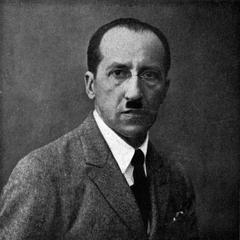
Piet Mondrian
Piet Mondrian (March 7, 1872 – February 1, 1944) was a Dutch painter and a key figure in the De Stijl movement, renowned for his geometric abstract art. Initially influenced by Impressionism and Cubism, he developed Neoplasticism, a style using straight lines, right angles, and primary colors (red, yellow, blue) plus non-colors (black, white, gray). His iconic works like Composition with Red, Yellow, and Blue sought universal harmony through simplification. Mondrian's ideas profoundly impacted modern art, design, and architecture. He spent his final years in New York, creating vibrant pieces like Broadway Boogie Woogie, reflecting jazz rhythms. His legacy endures as a pioneer of abstraction, influencing fields from fashion to digital art. more
You May Also Like
Source: The Intellectual Life
“The concept of individual with a conscience is one whose highest allegiance is to his fellow man.”
“Had I to carve an inscription on my tombstone I would ask for none other than "The Individual."”
“If an individual is born with the obligation to obey, who is born with the right to command?”
Source: Realizing Freedom: Libertarian Theory, History, and Practice
Source: The Varieties of Religious Experience