Quotessence
Home / Quotes / Quote by David Quammen

Quote by David Quammen

“Medical research using chimpanzee surrogates is not just a hot issue, made hotter in recent years by the rise of animal-rights movement and, in counterpoint, by the terror AIDS. It's also... a central conundrum within the much larger issue of humanity's relationship to nature. It's bigger than AIDS; it's bigger than the enterprise of according legalistic 'rights' to a few thousand species of vertebrates. By a sequence of almost syllogisticallly linked questions, it leads straight to the core of a very personal yet very global matter - whether we humans are really part of the natural world or not. It demands eventually that we ask ourselves, Is a human life sacred, or just valuable? And the corollary, If a valuable entity proliferates itself by a factor of six billion, is each unit still as valuable as it was?”

Quote by David Quammen

Work

The Boilerplate Rhino: Nature in the Eye of the Beholder

This book delves into the concept of how individuals interpret and interact with the natural world, using the enigmatic boilerplate rhino as a metaphorical focal point. It examines the diverse ways in which humans view and appreciate nature, offering a fresh perspective on our relationship with the environment. more

Author
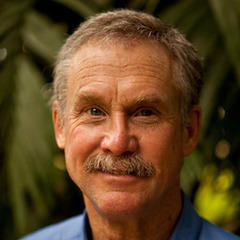
David Quammen
David Quammen

David Quammen is an American writer known for his in-depth exploration of natural history. His works often involve biology, ecology, and the relationship between humans and nature. Born on February 24, 1948, Quammen's writing career spans multiple genres, including scientific writing, travel literature, and journalism. more

You May Also Like

“Another common but mistaken assumption is that creativity is unique to humans so it would be difficult to automate any job that requires creativity. In chess, however, computers are already far more creative than humans. The same may become true of many other fields, from composing music to proving mathematical theorems to writing books like this one. Creativity is often defined as the ability to recognize patterns and then break them. If so, then in many fields computers are likely to become more creative than us, because they excel at pattern recognition.”

“A third mistaken assumption is that computers couldn’t replace humans in jobs requiring emotional intelligence, from therapists to teachers. This assumption depends, however, on what we mean by emotional intelligence. If it means the ability to correctly identify emotions and react to them in an optimal way, then computers may well outperform humans even in emotional intelligence. Emotions too are patterns. Anger is a biological pattern in our body. Fear is another such pattern. How do I know if you are angry or fearful? I’ve learned over time to recognize human emotional patterns by analyzing not just the content of what you say but also your tone of voice, your facial expression, and your body language. AI doesn’t have any emotions of its own, but it can nevertheless learn to recognize these patterns in humans. Actually, computers may outperform humans in recognizing human emotions, precisely because they have no emotions of their own. We yearn to be understood, but other humans often fail to understand how we feel, because they are too preoccupied with their own feelings. In contrast, computers will have an exquisitely fine-tuned understanding of how we feel, because they will learn to recognize the patterns of our feelings, while they have no distracting feelings of their own.”