Quotessence
Home / Quotes / Quote by Upamanyu Chatterjee

Quote by Upamanyu Chatterjee

“In his essay,Agastya had said that his real ambition was to be a domesticated male stray dog because they lived the best life.They were assured of food,and because they were stray they didn't have to guard a house or beg or shake paws or fetch trifles or be clean or anything similarly meaningless to earn their food.They were servile and sycophantic when hungry;once fed,and before sleep,they wagged their tails perfunctorily whenever their hosts passes,as an investment for future meals.A stray dog was free,he slept a lot,barked unexpectedly and only when he wanted to,and got a lot of sex.”

Quote by Upamanyu Chatterjee

Work

English, August: An Indian Story

Browse quotes and source details for this work. more

Author
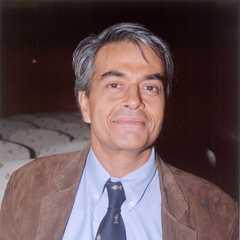
Upamanyu Chatterjee
Upamanyu Chatterjee

Upamanyu Chatterjee is an Indian author known for his unique literary style and profound insights into social realities. His works are often set in Mumbai and explore the lives and values of the Indian middle class. more

You May Also Like

“Deep within everyone's heart there always remains a sense of longing for that hour, that summer, that one brief moment of blossoming. For several weeks or months, rarely longer, a beautiful young woman lives outside ordinary life. She is intoxicated. She feels as if she exists beyond time, beyond its laws; she experiences not the monotonous succession of days passing by, but moments of intense, almost desperate happiness.”

“The weather had freshened almost to coldness, for the wind was coming more easterly, from the chilly currents between Tristan and the Cape; the sloth was amazed by the change; it shunned the deck and spent its time below. Jack was in his cabin, pricking the chart with less satisfaction than he could have wished: progress, slow, serious trouble with the mainmast-- unaccountable headwinds by night-- and sipping a glass of grog; Stephen was in the mizentop, teaching Bonden to write and scanning the sea for his first albatross. The sloth sneezed, and looking up, Jack caught its gaze fixed upon him; its inverted face had an expression of anxiety and concern. 'Try a piece of this, old cock,' he said, dipping his cake in the grog and proffering the sop. 'It might put a little heart into you.' The sloth sighed, closed its eyes, but gently absorbed the piece, and sighed again. Some minutes later he felt a touch upon his knee: the sloth had silently climbed down and it was standing there, its beady eyes looking up into his face, bright with expectation. More cake, more grog: growing confidence and esteem. After this, as soon as the drum had beat the retreat, the sloth would meet him, hurrying toward the door on its uneven legs: it was given its own bowl, and it would grip it with its claws, lowering its round face into it and pursing its lips to drink (its tongue was too short to lap). Sometimes it went to sleep in this position, bowed over the emptiness. 'In this bucket,' said Stephen, walking into the cabin, 'in this small half-bucket, now, I have the population of Dublin, London, and Paris combined: these animalculae-- what is the matter with the sloth?' It was curled on Jack's knee, breathing heavily: its bowl and Jack's glass stood empty on the table. Stephen picked it up, peered into its affable bleary face, shook it, and hung it upon its rope. It seized hold with one fore and one hind foot, letting the others dangle limp, and went to sleep. Stephen looked sharply round, saw the decanter, smelt to the sloth, and cried, 'Jack, you have debauched my sloth.”