Quotessence
Home / Quotes / Quote by Neil Gaiman

Quote by Neil Gaiman

Work

The View from the Cheap Seats: Selected Nonfiction

This book compiles a selection of the author's nonfiction writings, including essays and articles on various topics. more

Author
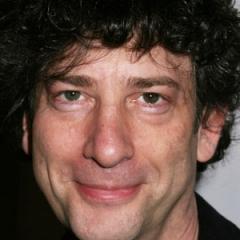
Neil Gaiman
Neil Gaiman

Neil Gaiman, born on November 10, 1960, is a renowned British author. His works span across various genres including fantasy, horror, and science fiction, with notable titles such as 'American Gods' and 'Good Omens'. Gaiman's writing style is distinctive and has won him a dedicated fan base. more

You May Also Like

“We are much more likely to be drawn to a messy bookstore than a neat one because the mess signifies vitality. We are not drawn to a bookstore because of tasteful, Finnish shelves in gunmetal gray mesh, each one displaying three carefully chosen, color-coordinated covers. Clutter -- orderly clutter, if possible -- is what we expect. Like a city. It's not quite a city unless there's more than enough.”

“The world shown us in books, whether the books be confessed epics or professed gospels, or in codes, or in political orations, or in philosophic systems, is not the main world at all: it is only the self-consciousness of certain abnormal people who have the specific artistic talent and temperament. A serious matter this for you and me, because the man whose consciousness does not correspond to that of the majority is a madman; and the old habit of worshipping madmen is giving way to the new habit of locking them up. And since what we call education and culture is for the most part nothing but the substitution of reading for experience, of literature for life, of the obsolete fictitious for the contemporary real, education, as you no doubt observed at Oxford, destroys, by supplantation, every mind that is not strong enough to see through the imposture and to use the great Masters of Arts as what they really are and no more: that is, patentees of highly questionable methods of thinking, and manufacturers of highly questionable, and for the majority but half valid representations of life. The schoolboy who uses his Homer to throw at his fellow's head makes perhaps the safest and most rational use of him; and I observe with reassurance that you occasionally do the same, in your prime, with your Aristotle. Fortunately for us, whose minds have been so overwhelmingly sophisticated by literature, what produces all these treatises and poems and scriptures of one sort or another is the struggle of Life to become divinely conscious of itself instead of blindly stumbling hither and thither in the line of least resistance. Hence there is a driving towards truth in all books on matters where the writer, though exceptionally gifted is normally constituted, and has no private axe to grind.”