Quotessence
Home / Quotes / Quote by Aldous Huxley

Quote by Aldous Huxley

“There can be no cancellation of accomplished facts; but for practical purposes a conspiracy of silence is almost as effective as cancellation. Unmentioned, what is can become as though it were not.”

Quote by Aldous Huxley

Work

point counter point

This book delves into the intricacies of human nature, societal conflicts, and philosophical debates, offering a rich tapestry of characters and narratives that challenge the reader's understanding of these themes. more
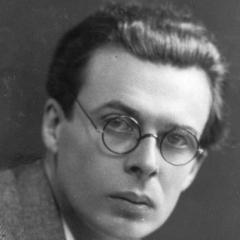
Author

Aldous Huxley
Aldous Huxley

Aldous Huxley was an English writer and philosopher, renowned for his dystopian novel 'Brave New World'. Born on July 26, 1894, in Godalming, Surrey, England, he was the younger brother of the poet and critic Leonard Huxley. Huxley's works frequently delved into the interplay of science, politics, and philosophy, and he was a prominent figure in the literary movement known as the 'Lost Generation'. He passed away on November 22, 1963. more

You May Also Like

“The experienced walker and nature lover will in most cases and in certain moods prefer to walk alone; he revels in the joy of it, he is self-contained, and all his adventures and experiences combine to make him independent of all company, because he is aware of a voice in the silence … To him the voice of the wild are soothing nepenthe, and the wind among the trees and the music of the corrie burn are his inspiration and delight. We shall often find him to be of a serious philosophical nature, and yet in love with life and the beauty of the world. He loves company, and knows the value of social intercourse; but he also loves his own companionship, and the fruits of solitude”

“I do not think there is a demonstrative proof (like Euclid) of Christianity, nor of the existence of matter, nor of the good will and honesty of my best and oldest friends. I think all three are (except perhaps the second) far more probable than the alternatives. The case for Christianity in general is well given by Chesterton…As to why God doesn't make it demonstratively clear; are we sure that He is even interested in the kind of Theism which would be a compelled logical assent to a conclusive argument? Are we interested in it in personal matters? I demand from my friend trust in my good faith which is certain without demonstrative proof. It wouldn't be confidence at all if he waited for rigorous proof. Hang it all, the very fairy-tales embody the truth. Othello believed in Desdemona's innocence when it was proved: but that was too late. Lear believed in Cordelia's love when it was proved: but that was too late. 'His praise is lost who stays till all commend.' The magnanimity, the generosity which will trust on a reasonable probability, is required of us. But supposing one believed and was wrong after all? Why, then you would have paid the universe a compliment it doesn't deserve. Your error would even so be more interesting and important than the reality. And yet how could that be? How could an idiotic universe have produced creatures whose mere dreams are so much stronger, better, subtler than itself?”