Quotessence
Home / Quotes / Quote by Ralph Waldo Emerson

Quote by Ralph Waldo Emerson

“The imitator dooms himself to hopeless mediocrity. The inventor did it, because it was natural to him, and so in him it has a charm. In the imitator, something else is natural, and he bereaves himself of his own beauty, to come short of another man's.”

Quote by Ralph Waldo Emerson

Work

Divinity School Address

Browse quotes and source details for this work. more

Author
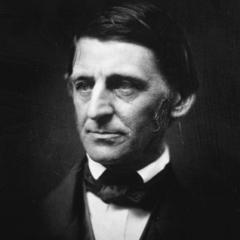
Ralph Waldo Emerson
Ralph Waldo Emerson

American essayist, poet, and philosopher. Born on May 25, 1803, and died on April 27, 1882. Known for his transcendentalist philosophy, his works have had a profound impact on literature and the intellectual world. more

You May Also Like

“To be a jazz freedom fighter is to attempt to galvanize and energize world-weary people into forms of organization with accountable leadership that promote critical exchange and broad reflection. The interplay of individuality and unity is not one of uniformity and unanimity imposed from above but rather of conflict among diverse groupings that reach a dynamic consensus subject to questioning and criticism. As with a soloist in a jazz quartet, quintet or band, individuality is promoted in order to sustain and increase the creative tension with the group--a tension that yields higher levels of performance to achieve the aim of the collective project. This kind of critical and democratic sensibility flies in the face of any policing of borders and boundaries of "blackness", "maleness", "femaleness", or "whiteness".”

“Creativity is paradoxical. To create, a person must have knowledge but forget the knowledge, must see unexpected connections in things but not have a mental disorder, must work hard but spend time doing nothing as information incubates, must create many ideas yet most of them are useless, must look at the same thing as everyone else, yet see something different, must desire success but embrace failure, must be persistent but not stubborn, and must listen to experts but know how to disregard them." [Twelve Things You Were Not Taught in School About Creative Thinking (The Creativity Post, December 6, 2011)]”

“Humanity is not an aggregate of individuals, a community of thinkers, each of whom is guaranteed from the outset to be able to reach agreement with the others because all participate in the same thinking essence. Nor, of course, is it a single Being in which the multiplicity of individuals are dissolved and into which these individuals are destined to be reabsorbed. As a matter of principle, humanity is precarious: each person can only believe what he recognizes to be true internally and, at the same time, nobody thinks or makes up his mind without already being caught up in certain relationships with others, which leads him to opt for a particular set of opinions. Everyone is alone and yet nobody can do without other people, not just because they are useful (which is not in dispute here) but also when it comes to happiness.”