Quotessence
Home / Quotes / Quote by Paul Klee

Quote by Paul Klee

Author

Paul Klee
Paul Klee

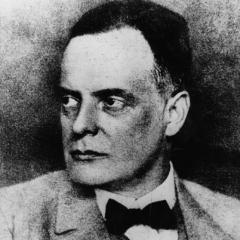
Paul Klee was a Swiss-born German expressionist painter known for his unique style and color usage. His works combined abstract and representational elements and often carried symbolic meanings. Klee's influence on the art world was profound, and he is considered one of the most important artists of the 20th century. more

You May Also Like

“...The efficacy of psychedelics with regard to art has to do with their ability to render language weightless, as fluid and ephemeral as those famous "bubble letters" of the sixties. Psychedelics, I think, disconnect both the signifier and the signified from their purported referents in the phenomenal world - simultaneously bestowing upon us a visceral insight into the cultural mechanics of language, and a terrifying inference of the tumultuous nature that swirls beyond it. In my own experience, it always seemed as if language were a tablecloth positioned neatly upon the table until some celestial busboy suddenly shook it out, fluttering and floating it, and letting it fall back upon the world in not quite the same position as before - thereby giving me a vertiginous glimpse into the abyss that divides the world from our knowing of it. And it is into this abyss that the horror vacui of psychedelic art deploys itself like an incandescent bridge. Because it is one thing to believe, on theoretical evidence, that we live in a prison-house of language. It is quite another to know it, to actually peek into the slippery emptiness as the Bastille explodes around you. Yet psychedelic art takes this apparent occasion for despair and celebrates our escape from linguistic control by flowing out, filling that rippling void with meaningful light, laughter, and a gorgeous profusion.”

“Those who are esteemed umpires of taste, are often persons who have acquired some knowledge of admired pictures or sculptures, and have an inclination for whatever is elegant; but if you inquire whether they are beautiful souls, and whether their own acts are like fair pictures, you learn that they are selfish and sensual. Their cultivation is local, as if you should rub a log of dry wood in one spot to produce fire, all the rest remaining cold. Their knowledge of the fine arts is some study of rules and particulars, or some limited judgment of color or form which is exercised for amusement or for show. It is a proof of the shallowness of the doctrine of beauty, as it lies in the minds of our amateurs, that men seem to have lost the perception of the instant dependence of form upon soul.”