“With respect to Stoicism, Hadot has described four features that constitute the universal Stoic attitude. They are, first, the Stoic consciousness of "the fact that no being is alone, but that we make up part of a Whole, constituted by the totality of human beings as well as by the totality of the cosmos"; second, the Stoic "feels absolutely serene, free, and invulnerable to the extent that he has become aware that there is no other evil but moral evil and that the only thing that counts is the purity of moral consciousness"; third, the Stoic "believes in the absolute value of the human person," a belief that is "at the origin of the modern notion of the 'rights of man'"; finally, the Stoic exercises his concentration "on the present instant, which consists, on the one hand, in living as if we were seeing the world for the first and for the last time, and, on the other hand, in being conscious that, in this lived presence of the instant, we have access to the totality of time and of the world." 17 Thus, for Hadot, cosmic consciousness, the purity of moral consciousness, the recognition of the equality and absolute value of human beings, and the concentration on the present instant represent the universal Stoic attitude. The universal Epicurean attitude essentially consists, by way of "a certain discipline and reduction of desires, in returning from pleasures mixed with pain and suffering to the simple and pure pleasure of existing.”
Quote by Pierre Hadot
Work
Philosophy as a Way of Life: Spiritual Exercises from Socrates to Foucault
Browse quotes and source details for this work. more
Author
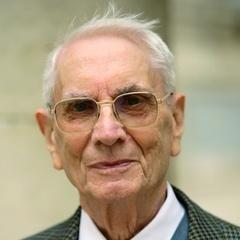
Pierre Hadot
Pierre Hadot (February 21, 1922 - April 24, 2010) was a prominent French philosopher known for his extensive research on ancient Greek philosophy and his exploration of the relationship between philosophy and life. more
You May Also Like
Source: Rapture
“If you are confident that it is the voice of GOD, why are you afraid?”
Source: Rapture
“He felt a hollow space between himself and the person he was supposed to be.”
Source: The City of Snow & Stars
Source: Ensnared
Source: Destination unknown
Source: Louise Bourgeois: Drawings and Observations