Quotessence
Home / Quotes / Quote by Jared Taylor

Quote by Jared Taylor

“Now that Mexicans can retain their nationality, activist groups encourage them to naturalize and become active in Hispanic causes. There was a huge push in 2007 to naturalize in time for the 2008 elections. Newspapers and television joined church groups and Hispanic activists in a campaign called Ya Es Hora. ¡Ciudadanía! (It’s time. Citizenship!). La Opinión, a Los Angeles newspaper, published full-page advertisements explaining how to apply for citizenship, and the Spanish-language network Univision’s KMEX television station in Los Angeles promoted citizenship workshops on the air. A popular radio personality named Eddie Sotelo ran a call-in contest called “Who Wants to be a Citizen?” in which listeners could win prizes by answering questions from the citizenship exam. In 2008, Janet Murguia, president of La Raza, was frank about why she was part of a widespread effort to register Hispanics to vote: She wanted them to “help shape the political landscape.” In California, where 300,000 people—overwhelmingly Hispanic—were naturalized in 2008, whites were expected to be a minority of the electorate in 2026. Joanuen Llamas, who immigrated legally in 1998, naturalized in 2008 after attending the massive 2006 demonstrations in support of illegal aliens. She said she was inspired by one of the pro-amnesty slogans she had heard: “Today we march, tomorrow we vote.” Hispanics like her are not naturalizing because they love America but because they want to change it.”

Quote by Jared Taylor

Work

White Identity: Racial Consciousness in the 21st Century

Browse quotes and source details for this work. more

Author
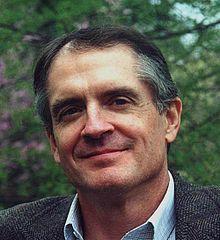
Jared Taylor
Jared Taylor

Jared Taylor, born on September 15, 1951, is an American journalist known for his views on racism and immigration issues. He was the editor of 'American Renaissance' magazine and has contributed articles to various publications, including 'The American Conservative' and 'The New American'. more

You May Also Like

“Needless to say, Mexico carefully controls its own borders. In 2005, it caught and deported nearly a quarter million illegals, mostly from Guatemala, Honduras, and El Salvador. Mexico thinks so little of our border, however, that its soldiers have made hundreds of incursions. In 2008, Edward Tuffy, head of the Border Patrol’s largest union called on President Bush to stop illegal crossings in which Mexican soldiers have threatened and even fired on US agents. On August 3 of that year, four Mexican soldiers crossed the clearly marked border and held a Border Patrol agent at gunpoint. “Time after time they have gotten away with these incursions,” said Mr. Tuffy, “and time after time our government has not taken a forceful stand against them.” All political factions in Mexico are united in the view that the United States has no right to control its southern border. Felipe Calderon, who succeeded Mr. Fox, unswervingly maintained this policy. During his first state-of-the-nation address in 2007, he won a standing ovation by repeating the traditional government position: “Mexico does not end at its borders,” and, “Where there is a Mexican, there is Mexico.” The view that Mexicans have a natural right to enter the United States explains the vitriol that met American discussions in 2006 about ways to stop illegal crossings, and an eventual congressional vote to build a wall along certain parts of the border. President Vicente Fox called the plan for a wall “disgraceful and shameful,” and promised that if it were ever built it would be torn down like the Berlin Wall. Interior Minister Santiago Creel boasted that “there is no wall that can stop” Mexicans from crossing into the US. Foreign Secretary Luis Ernesto Derbez warned that “Mexico is not going to bear, it is not going to permit, and it will not allow a stupid thing like this wall.” He even said he would ask the United Nations to declare the American plan illegal.”

“Another reason for our passivity is the fact that Hispanics are now 16 percent of the population, and their numbers are growing. Politicians from both parties say they cannot afford to alienate Hispanics because of their increasing power at the ballot box. But what do Hispanics want? Amnesty for illegal immigrants and yet more Hispanic immigration. It is folly for white politicians to think they will win the loyalty of Hispanic voters by endorsing policies that increase Hispanic power. As Hispanics gain in numbers and influence, they will replace non-Hispanic politicians with Hispanics. Foolish whites will be shoved out just as blacks shoved out Chris Bell, the white Democratic congressman from Texas [...] who was left sputtering that blacks forgot all about his career of “fighting for diversity” once they had a chance to vote for a black. It is already nearly impossible to discuss immigration rationally, or even enforce laws that are on the books. If we are afraid to take measures that might upset 16 percent of the population, what are our chances of defending larger interests if Hispanics are 20, 30, or even 40 percent of the country? We already have tens of millions of citizens whose primary loyalty is not to the United States but to Mexico. If there were a crisis with Mexico is there any doubt which side they would take? The United States already finds it difficult to advance its own interests against Mexican opposition. As the Mexican-American population grows, it could become impossible.”

“Among the Founders, Thomas Jefferson wrote about race at greatest length. He thought blacks were mentally inferior to whites and biologically distinct: “[They] secrete less by the kidnies [sic], and more by the glands of the skin, which gives them a strong and disagreeable odor.” He hoped slavery would be abolished, but he did not want free blacks to remain in America: “When freed, [the Negro] is to be removed from beyond the reach of mixture.” Jefferson was one of the first and most influential advocates of “colonization,” or returning blacks to Africa. He also believed in the destiny of whites as a racially distinct people. In 1786 he wrote, “Our Confederacy [the United States] must be viewed as the nest from which all America, North and South, is to be peopled.” In 1801 he looked forward to the day “when our rapid multiplication will expand itself . . . over the whole northern, if not the southern continent, with a people speaking the same language, governed in similar forms, and by similar laws; nor can we contemplate with satisfaction either blot or mixture on that surface.”

“Benjamin Franklin wrote little about race, but had a sense of racial loyalty. “[T]he Number of purely white People in the World is proportionably [sic] very small,” he observed. “ . . . I could wish their Numbers were increased.” James Madison, like Jefferson, believed the only solution to the problem of racial friction was to free the slaves and send them away. He proposed that the federal government sell off public lands in order to raise the money to buy the entire slave population and transport it overseas. He favored a Constitutional amendment to establish a colonization society to be run by the President. After two terms in office, Madison served as chief executive of the American Colonization Society, to which he devoted much time and energy. At the inaugural meeting of the society in 1816, Henry Clay described its purpose: to “rid our country of a useless and pernicious, if not dangerous portion of the population.” The following prominent Americans were not merely members but served as officers of the society: Andrew Jackson, Daniel Webster, Stephen Douglas, William Seward, Francis Scott Key, Winfield Scott, and two Chief Justices of the Supreme Court, John Marshall and Roger Taney. All opposed the presence of blacks in the United States and thought expatriation was the only long-term solution. James Monroe was such an ardent champion of colonization that the capital of Liberia is named Monrovia in gratitude for his efforts. As for Roger Taney, as chief justice he wrote in the Dred Scott decision of 1857 what may be the harshest federal government pronouncement on blacks ever written: Negroes were “beings of an inferior order, and altogether unfit to associate with the White race, either in social or political relations; and so far inferior that they have no rights which a White man is bound to respect.” Abraham Lincoln considered blacks to be—in his words—“a troublesome presence” in the United States. During the Lincoln-Douglas debates he expressed himself unambiguously: “I am not nor ever have been in favor of making voters or jurors of negroes, nor of qualifying them to hold office, nor to intermarry with white people; and I will say in addition to this that there is a physical difference between the white and black races which I believe will for ever forbid the two races living together on terms of social and political equality.” His opponent, Stephen Douglas, was even more outspoken, and made his position clear in the very first debate: “For one, I am opposed to negro citizenship in any form. I believe that this government was made on the white basis. I believe it was made by white men for the benefit of white men and their posterity forever, and I am in favor of confining the citizenship to white men—men of European birth and European descent, instead of conferring it upon negroes and Indians, and other inferior races.”

“Needless to say, what whites now think and say about race has undergone a revolution. In fact, it would be hard to find other opinions broadly held by Americans that have changed so radically. What whites are now expected to think about race can be summarized as follows: Race is an insignificant matter and not a valid criterion for any purpose—except perhaps for redressing wrongs done to non-whites. The races are equal in every respect and are therefore interchangeable. It thus makes no difference if a neighborhood or nation becomes non-white or if white children marry outside their race. Whites have no valid group interests, so it is illegitimate for them to attempt to organize as whites. Given the past crimes of whites, any expression of racial pride is wrong. The displacement of whites by non-whites through immigration will strengthen the United States. These are matters on which there is little ground for disagreement; anyone who holds differing views is not merely mistaken but morally suspect. By these standards, of course, most of the great men of America’s past are morally suspect, and many Americans are embarrassed to discover what our traditional heroes actually said. Some people deliberately conceal this part of our history. For example, the Jefferson Memorial has the following quotation from the third president inscribed on the marble interior: “Nothing is more certainly written in the book of fate than that these people [the Negroes] shall be free.” Jefferson did not end those words with a period, but with a semicolon, after which he wrote: “nor is it less certain that the two races equally free, cannot live under the same government.” The Jefferson Memorial was completed in 1942. A more contemporary approach to the past is to bring out all the facts and then repudiate historical figures. This is what author Conor Cruise O’Brien did in a 1996 cover story for The Atlantic Monthly. After detailing Jefferson’s views, he concluded: “It follows that there can be no room for a cult of Thomas Jefferson in the civil religion of an effectively multiracial America . . . . Once the facts are known, Jefferson is of necessity abhorrent to people who would not be in America at all if he could have had his way.” Columnist Richard Grenier likened Jefferson to Nazi SS and Gestapo chief Heinrich Himmler, and called for the demolition of the Jefferson Memorial “stone by stone.” It is all very well to wax indignant over Jefferson’s views 170 years after his death, but if we expel Jefferson from the pantheon where do we stop? Clearly Lincoln must go, so his memorial must come down too. Washington owned slaves, so his monument is next. If we repudiate Jefferson, we do not just change the skyline of the nation’s capital, we repudiate practically our entire history. This, in effect, is what some people wish to do. American colonists and Victorian Englishmen saw the expansion of their race as an inspiring triumph. Now it is cause for shame. “The white race is the cancer of human history,” wrote Susan Sontag. The wealth of America used to be attributed to courage, hard work, and even divine providence. Now, it is common to describe it as stolen property. Robin Morgan, a former child actor and feminist, has written, “My white skin disgusts me. My passport disgusts me. They are the marks of an insufferable privilege bought at the price of others’ agony.”

“Race relations are difficult, sometimes agonizing. The harmony for which the country yearns is not at hand, and may never be achieved. Because whites are generally blamed for making race into such an enduring problem, white racism has become not just a moral failing but the worst moral failing. Our society forgives sexual misconduct, abuse of office, dishonesty, and incompetence far more readily than it does any action by whites that could be described as “racism.” At the same time, promoting diversity is a way for whites to demonstrate virtue. Diversity policies benefit non-whites by encouraging their immigration, employment, promotion, or admission to university, and to support diversity is the most readily recognizable way of demonstrating opposition to racism. For whites, diversity therefore has moral rather than practical goals, and this is why it does not require justification in ordinary terms. Americans attribute unrealistic, exaggerated benefits to diversity because they support it for emotional rather than rational reasons. They call it “America’s greatest strength” not because they have weighed all of America’s strengths and come to a rational conclusion about which is greatest. They are expressing an emotional commitment to something they feel they must support in order to prove they are not racists.”

“Immigration has contributed greatly to an environment in which it is obligatory for whites to promote diversity. Almost as an accidental by-product of immigration reform, the United States opened itself to large numbers of non-white newcomers who are now the primary source of diversity. Although immigration is likely to reduce whites to a minority in just a few decades, racial etiquette requires that whites must not think of this as anything but an exciting prospect. The logic of anti-racism means diversity must be a strength because it would be racist to oppose it. For whites to express doubts about the wisdom of policies that ensure their children will be racial minorities is to open themselves to charges of bigotry. To avoid these charges they must speak with enthusiasm about the diversity immigration brings. Their behavior, however, belies their words; they flee the very diversity they are at such pains to praise. Non-whites promote diversity because they profit from it. It increases their opportunities at the expense of whites. Celebrations of diversity also flatter them. After all, they are providing what is claimed to be America’s “greatest strength.” There is more than a hint of arrogance in this view—that the United States was lifeless and incomplete before Hispanics or Asians came in large numbers—but it is now common even for immigrants to insist that diversity is central to our identity. Whites have been persuaded to support diversity—even if it restricts opportunities for them and reduces their numbers and influence—because they have been taught that not to support it would be racist. This is truly astonishing: Whites are supporting something that is not only against their own interests but that is manifestly untrue.”

“In 1998, Anthony Williams was elected mayor of Washington, DC. Mr. Williams had attended Harvard and Yale, clearly wanted to run an efficient city government, and had considerable white support. Although he was black, Mr. Williams left many blacks wondering if he was “black enough.” A black writer for the Washington Post raised “the question of whether whites, assuming they care one way or the other, even understand the concept of ‘How black is a black person?’ ” He went on to say that Mayor Williams had fired incompetents, but that “the firings hurt black workers most of all, creating the impression—fairly or unfairly—that he has little or no special concern for people who look like him.” A black politician who is more concerned about efficiency than about jobs for blacks may not be black enough. The writer concluded: “Blackness . . . is a state of common spiritual idealism that serves to unite the group for the purpose of survival. . . . [T]here is not one person of color who can separate himself or herself from the rest of the people of color.” The mayoral election in Washington 12 years later raised exactly the same question. Incumbent Adrian Fenty was black, but not black enough. Like Mr. Williams before him, he hired people for their ability, and not one of his top three appointments in public education was black, nor were the police chief, fire chief, or attorney general. “How can there not be one African-American leader in that cluster?” asked his 2010 challenger, Vincent Gray, also black, in a question that resonated with black voters. Mr. Gray went on to win with 80 percent of the black vote. A columnist who is himself black explained Mr. Fenty’s loss: “In short, the mayor appointed the best people he could find, instead of running a racial patronage system, as a black mayor of a city with a black majority is apparently expected to.”

“Whites may be surprised by the strength of black voter solidarity. Chris Bell, a white Democratic congressman from Texas, was redistricted into a largely black area and promptly crushed in the 2004 Democratic primary by the former head of the Houston chapter of the NAACP. He felt betrayed: He said he had spent his entire career “fighting for diversity, championing diversity,” and was dismayed that “many people do not want to look past the color of your skin.” This only demonstrated how little Mr. Bell understood blacks. As Bishop Paul Morton of the St. Stephen Full Gospel Baptist Church in New Orleans said of black voters, “I’ve talked to some people who say, ‘I don’t care how bad the black is, he’s better than any white.’” Many blacks also expect all blacks to vote the same way. Jesse Jackson criticized Alabama congressman Artur Davis for voting against Mr. Obama’s signature medical insurance legislation, saying, “You can’t vote against healthcare and call yourself a black man.” Racial consciousness explains why President Barack Obama drew support even from blacks who ordinarily vote Republican. No fewer than 87 percent of blacks who identified themselves as conservatives said they would vote for him. In the three states that track party registration by race—Florida, Louisiana, and North Carolina—blacks were dropping off the Republican rolls in record numbers and rallying to the Democrats. As one GOP black explained during the primaries, “Most black Republicans who support John McCain won’t tell you this, but if Barack Obama is the nominee for the Democratic ticket, they will go into the voting booth in November and vote for Obama.” “Among black conservatives, they tell me privately, it would be very hard to vote against him [Obama] in November,” said black conservative radio host Armstrong Williams. During the campaign, former San Francisco mayor Willie Brown said, “I think most white politicians do not understand that the race pride we [blacks] all have trumps everything else.”