Quotessence
Home / Quotes / Quote by Friedrich Nietzsche

Quote by Friedrich Nietzsche

Author

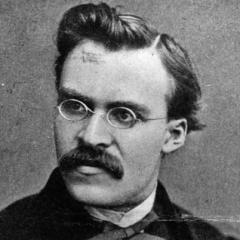
Friedrich Nietzsche
Friedrich Nietzsche

Friedrich Nietzsche was a German philosopher, cultural critic, poet, and writer whose works have had a profound impact on subsequent philosophy, literature, and thought. His ideas revolve around concepts such as the 'will to power', the 'Übermensch', and the 'eternal recurrence'. more

You May Also Like

“Про повернення євреїв на Схід ніколи не було й мови: ніхто в Радянському Союзі, Польщі чи деінде не виявляв бодай найменшого інтересу до цього. На Заході на них теж ніхто особливо не чекав, надто якщо вони мали освіту та інтелектуальний фах. Тож, за іронією долі, вони залишилися в Німеччині.”

“У Франції нацистам вистачило півтори тисячі своїх людей. Вони були такі впевнені в надійності французької поліції та військових підрозділів, що, окрім адміністративного штату, призначили лишень 6 тисяч осіб німецької цивільної та військової поліції, щоб забезпечувати покору 35-мільйонної країни.”

“Lurking beneath the surface of every society, including ours, is the passionate yearning for a nationalist cause that exalts us, the kind that war alone is able to deliver. It reduces and at times erases the anxiety of individual consciousness. We abandon individual responsibility for a shared, unquestioned communal enterprise, however morally dubious.”

“War is necrophilia. And this necrophilia is central to soldiering, just as it is central to the makeup of suicide bombers and terrorists. The necrophilia is hidden under platitudes about duty or comradeship. It awaits, especially in moments when we seem to have little to live for and no hope, or in moments when the intoxication of war is at its pitch, to be unleashed. When we spend long enough in war it comes to us as a kind of release, a fatal and seductive embrace that can consummate the long flirtation in war with our own destruction. The ancient Greeks had a word for such a drive. They called it ekpyrosis - to be consumed by a ball of fire. They used the word to describe heroes.”