Quotessence
Home / Quotes / Quote by Rachel Carson

Quote by Rachel Carson

Work

Silent Spring

Published in 1962, Silent Spring is a seminal work that sparked the modern environmental movement. The book investigates the effects of chemical pesticides on the environment and human health, leading to significant changes in environmental policy and the regulation of pesticides. more
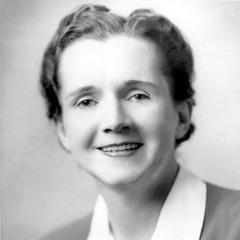
Author

Rachel Carson
Rachel Carson

Rachel Carson, an American marine biologist, was born on May 27, 1907, and passed away on April 14, 1964. She is renowned for her in-depth research on marine ecosystems and her advocacy for environmental issues. Carson's book 'Silent Spring' revealed the destructive impact of pesticides on the environment, which had a profound impact on the environmental movement. more

You May Also Like

“Who has made the decision that sets in motion these chains of poisonings, this ever-widening wave of death that spreads out, like ripples when a pebble is dropped into a still pond? Who has placed in one pan of the scales the leaves that might have been eaten by the beetles and in the other the pitiful heaps of many-hued feathers, the lifeless remains of the birds that fell before the unselective bludgeon of insecticidal poisons? Who has decided - who has the right to decide - for the countless legions of people who were not consulted that the supreme value is a world without insects, even though it be also a sterile world ungraced by the curving wing of a bird in flight? The decision is that of the authoritarian temporarily entrusted with power; he has made it during a moment of inattention by millions to whom beauty and the ordered world of nature still have a meaning that is deep and imperative.”

“Caviar. How very nice of them," Carol said, looking inside a sandwich. "Do you like caviar?" "No. I wish I did." "Why?" Therese watched Carol take a small bite of the sandwich from which she had removed the top slice of bread, a bit where the most caviar was. "Because people always like caviar so much when they do like it," Therese said. Carol smiled, and went on nibbling, slowly. "It's an acquired taste. Acquired tastes are always more pleasant--and hard to get rid of.”

“Physically, Manya was both appealing and aristocratic in her bearing. It wasn't her copious white hair that attracted men, her flawless white skin, her billowing breasts, but the innate womanliness that emanated from her. Even when she wore her cooking clothes- a mammoth Hoover apron that she slipped on over her head and tied around a baggy dress or her cardigan sweater, a dull brown thing appropriate for shopping- she exuded a sympathetic femininity. Many didn't give much thought to her appearance. More often than not she washed her face and body with the brown kosher soap that contained no fat from forbidden animals, and wrapped her hair in a haphazard bun held together with several large imitation-turquoise hairpins. Her cooking shoes were splattered with chicken and goose fat, bits and oddments of duck, salmon roe, even calves' brains. Because she had been raised on the Black Sea, she loved caviar, so every now and then a glistening bead would fall upon her well-fed shoes. The smell of food on her body made her no less alluring.”

“They ordered all the things they'd never eaten before, things from the sea: Venus clams and whelks, potatoes pressed with caviar, champagne and Chambertin, Rex finally pulling the waiter aside and asking for more caviar, making a bowl with his giant hands, the best caviar he'd ever eaten, and by god, he wanted his fill. They would eat caviar all across the city that week, in fine restaurants and cafés and bistros, mounded in ice bowls, from tiny ivory spoons, spread on toast, on blinis, on eggs and potatoes, but Rex would always return to that first night, his first bite, and how he would never have another as good.”

“The train of thought went like this: I scribbled down the most "sophisticated" foods I could think of. Foie gras. Truffles. Expensive wine. Caviar. Ibérico ham. The one that struck a chord with my Jewish brain was caviar. Caviar served with blinis, little pancakes hailing from eastern Europe. In Russia they served blinis with caviar and sour cream. But even if I could make a hundred and fifteen blinis in the time allowed (since we had to make a few extras for beauty shots and mistakes), I couldn't just serve them with caviar and sour cream. That wasn't transformative enough. Original enough. What else was served with blinis? I tapped my pen thoughtfully against my Chef Supreme notepad. We were getting to the end of our planning session, and the way the others around me were nodding and whispering to themselves was making me nervous. Sadie, they all know exactly what they're doing, and you don't, I thought to myself. And then I nodded, confirming it. Jam. Blinis were served sweet-style with jam. But even if I made my own jam, that wouldn't be enough. I needed a wow factor. What if... what if I made sweet blinis, but disguised them as savory blinis? Ideas ran through my head as we were driven to the grocery store. I wasn't hugely into molecular gastronomy, but even I knew how to take a liquid or an oil and turn it into small gelatinous pearls not unlike fish eggs. I could take jam, thin it out, and turn it into caviar. Then what would be my sour cream? A sweetened mascarpone whip? And then I needed something to keep all the sweetness from becoming overwhelming. I'd have to make the jam nice and tart. And maybe add a savory element. A fried sage leaf? That would be interesting...”