Quotessence
Home / Quotes / Quote by Franz Kafka

Quote by Franz Kafka

Work

The castle

This book delves into the lives of individuals within a remote castle, examining the absurdities and complexities of an oppressive administrative system. It is renowned for its philosophical depth and intricate narrative structure. more
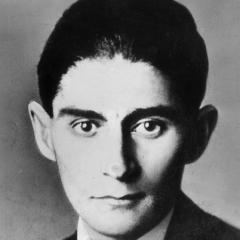
Author

Franz Kafka
Franz Kafka

Franz Kafka (July 3, 1883 - June 3, 1924) was an important German-language novelist of the 20th century, known for his unique literary style and profound philosophical thoughts. His works, often themed around loneliness, alienation, and existentialism, have had a profound impact on literature and philosophy. more

You May Also Like

“I'm all these words, all these strangers, this dust of words, with no ground for their settling, no sky for their dispersing, coming together to say, fleeing one another to say, that I am they, all of them, those that merge, those that part, those that never meet, and nothing else, yes, something else, that I'm something quite different, a quite different thing, a wordless thing in an empty place, a hard shut dry cold black place, where nothing stirs, nothing speaks, and that I listen, and that I seek, like a caged beast born of caged beasts born of caged beasts born of caged beasts born in a cage and dead in a cage, born and then dead, born in a cage and then dead in a cage, in a word like a beast, in one of their words, like such a beast, and that I seek, like such a beast, with my little strength, such a beast, with nothing of its species left but fear and fury, no, the fury is past, nothing but fear, nothing of all its due but fear centupled, fear of its shadow, no, blind from birth, of sound then, if you like, we'll have that, one must have something, it's a pity, but there it is, fear of sound, fear of sounds, the sounds of beasts, the sounds of men, sounds in the daytime and sounds at night, that's enough, fear of sounds all sounds, more or less, more or less fear, all sounds, there's only one, continuous, day and night, what is it, it's steps coming and going, it's voices speaking for a moment, it's bodies groping their way, it's the air, it's things, it's the air among the things, that's enough, that I seek, like it, no, not like it, like me, in my own way, what am I saying, after my fashion, that I seek, what do I seek now, what it is, it must be that, it can only be that, what it is, what it can be, what what can be, what I seek, no, what I hear, I hear them, now it comes back to me, they say I seek what it is I hear, I hear them, now it comes back to me, what it can possibly be, and where it can possibly come from, since all is silent here, and the walls thick, and how I manage, without feeling an ear on me, or a head, or a body, or a soul, how I manage, to do what, how I manage, it's not clear, dear dear, you say it's not clear, something is wanting to make it clear, I'll seek, what is wanting, to make everything clear, I'm always seeking something, it's tiring in the end, and it's only the beginning.”

“I love the stillness of the wood; I love the music of the rill: I love the couch in pensive mood Upon some silent hill. Scarce heard, beneath yon arching trees, The silver-crested ripples pass; and, like a mimic brook, the breeze Whispers among the grass. Here from the world I win release, Nor scorn of men, nor footstep rude, Break into mar the holy peace Of this great solitude. Here may the silent tears I weep Lull the vested spirit into rest, As infants sob themselves to sleep Upon a mothers breast. But when the bitter hour is gone, And the keen throbbing pangs are still, Oh, sweetest then to couch alone Upon some silent hill! To live in joys that once have been, To put the cold world out of sight, And deck life's drear and barren scene With hues of rainbow-light. For what to man the gift of breath, If sorrow be his lot below; If all the day that ends in death Be dark with clouds of woe? Shall the poor transport of an hour Repay long years of sore distress— The fragrance of a lonely flower Make glad the wilderness? Ye golden house of life's young spring, Of innocence, of love and truth! Bright, beyond all imagining, Thou fairy-dream of youth! I'd give all wealth that years have piled, The slow result of Life's decay, To be once more a little child For one bright summer's day.”

“If he silently decides not to say something when they’re talking, Marianne will ask ‘what?’ within one or two seconds. This ‘what?’ question seems to him to contain so much: not just the forensic attentiveness to his silences that allows her to ask in the first place, but a desire for total communication, a sense that anything unsaid is an unwelcome interruption between them.”