Quotessence
Home / Quotes / Quote by Flannery O'Connor

Quote by Flannery O'Connor

“We live in an unbelieving age but one which is markedly and lopsidedly spiritual. There is one type of modern man who recognizes spirit in himself but who fails to recognize a being outside himself whom he can adore as Creator and Lord; consequently he has become his own ultimate concern. He says with Swinburne, "Glory to man in the highest, for he is the master of things," or with Steinbeck, "In the end was the word and the word was with men." For him, man has his own natural spirit of courage and dignity and pride and must consider it a point of honor to be satisfied with this. There is another type of modern man who recognizes a divine being not himself, but who does not believe that this being can be known anagogically or defined dogmatically or received sacramentally. Spirit and matter are separated for him. Man wanders about, caught in a maze of guilt he can't identify, trying to reach a God he can't approach, a God powerless to approach him. And there is another type of modern man who can neither believe nor contain himself in unbelief and who searches desperately, feeling about in all experience for the lost God.”

Quote by Flannery O'Connor

Work

Mystery and Manners: Occasional Prose

This book is a compilation of essays that delve into a range of topics, offering insights into the author's perspectives on literature, art, and personal anecdotes. more

Author
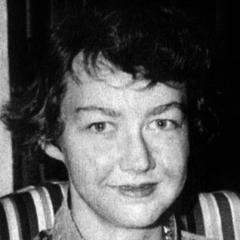
Flannery O'Connor
Flannery O'Connor

Flannery O'Connor was an American writer known for her unique Southern background and profound religious themes. Her works often explore moral and religious issues through satire and humor, with her novels 'Wise Blood' and 'The Violent Bear It Away' being among her most famous. more

You May Also Like

“There is no solution for Europe other than deepening the democratic values it invented. It does not need a geographical extension, absurdly drawn out to the ends of the Earth; what it needs is an intensification of its soul, a condensation of its strengths. It is one of the rare places on this planet where something absolutely unprecedented is happening, without its people even knowing it, so much do they take miracles for granted. Beyond imprecation and apology, we have to express our delighted amazement that we live on this continent and not another. Europe, the planet's moral compass, has sobered up after the intoxication of conquest and has acquired a sense of the fragility of human affairs. It has to rediscover its civilizing capabilities, not recover its taste for blood and carnage, chiefly for spiritual advances. But the spirit of penitence must not smother the spirit of resistance. Europe must cherish freedom as its most precious possession and teach it to schoolchildren. It must also celebrate the beauty of discord and divest itself of its sick allergy to confrontation, not be afraid to point out the enemy, and combine firmness with regard to governments and generosity with regard to peoples. In short, it must simply reconnect with the subversive richness of its ideas and the vitality of its founding principles. Naturally, we will continue to speak the double language of fidelity and rupture, to oscillate between being a prosecutor and a defense lawyer. That is our mental hygiene: we are forced to be both the knife and the wound, the blade that cuts and the hand that heals. The first duty of a democracy is not to ruminate on old evils, it is to relentlessly denounce its present crimes and failures. This requires reciprocity, with everyone applying the same rule. We must have done with the blackmail of culpability, cease to sacrifice ourselves to our persecutors. A policy of friendship cannot be founded on the false principle: we take the opprobrium, you take the forgiveness. Once we have recognized any faults we have, then the prosecution must turn against the accusers and subject them to constant criticism as well. Let us cease to confuse the necessary evaluation of ourselves with moralizing masochism. There comes a time when remorse becomes a second offence that adds to the first without cancelling it. Let us inject in others a poison that has long gnawed away at us: shame. A little guilty conscience in Tehran, Riyadh, Karachi, Moscow, Beijing, Havana, Caracas, Algiers, Damascus, Yangon, Harare, and Khartoum, to mention them alone, would do these governments, and especially their people, a lot of good. The fines gift Europe could give the world would be to offer it the spirit of critical examination that it has conceived and that has saved it from so many perils. It is a poisoned gift, but one that is indispensable for the survival of humanity.”

“Your world needs you. So, use your education to become endowed with muscles of iron and nerves of steel. Do not exploit the means of education to become a man or a woman. Use it to become a human being, in the pursuit of excellence.”

“Neuroscience makes us connect with each other at an emotional level. It makes us make friends. It makes us dream more positively. It makes us more optimistic about ourselves and the world even in our darkest days. It makes us achieve our goal endowed with strength even through immense miseries. It allows us to attain the subjective reality of our fellow humans. Imbued with the understanding of the mind we can walk in the shoes of other people.”