Quotessence
Home / Quotes / Quote by John Muir

Quote by John Muir

Work

John of the Mountains: The Unpublished Journals of John Muir

John of the Mountains: The Unpublished Journals of John Muir is a collection of personal writings by John Muir, detailing his experiences and observations in the American wilderness. The journals offer a unique glimpse into Muir's life and his deep connection to nature, reflecting his influential role in the conservation movement. more

Author
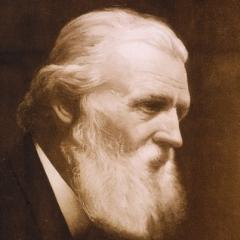
John Muir
John Muir

John Muir (April 21, 1838 - December 24, 1914) was an American naturalist, writer, explorer, and environmentalist. Known for his love of nature and advocacy for environmental protection, Muir is considered one of the pioneers of the modern environmental movement. more

You May Also Like

“Your friends are all the dullest dogs I know. They are not beautiful: they are only decorated. They are not clean: they are only shaved and starched. They are not dignified: they are only fashionably dressed. They are not educated: they are only college passmen. They are not religious: they are only pewrenters. They are not moral: they are only conventional. They are not virtuous: they are only cowardly. They are not even vicious: they are only “frail.” They are not artistic: they are only lascivious. They are not prosperous: they are only rich. They are not loyal, they are only servile; not dutiful, only sheepish; not public spirited, only patriotic; not courageous, only quarrelsome; not determined, only obstinate; not masterful, only domineering; not self-controlled, only obtuse; not self-respecting, only vain; not kind, only sentimental; not social, only gregarious; not considerate, only polite; not intelligent, only opinionated; not progressive, only factious; not imaginative, only superstitious; not just, only vindictive; not generous, only propitiatory; not disciplined, only cowed; and not truthful at all: liars every one of them, to the very backbone of their souls.”

“What makes you think human beings are sentient and aware? There's no evidence for it. Human beings never think for themselves, they find it too uncomfortable. For the most part, members of our species simply repeat what they are told-and become upset if they are exposed to any different view. The characteristic human trait is not awareness but conformity, and the characteristic result is religious warfare. Other animals fight for territory or food; but, uniquely in the animal kingdom, human beings fight for their 'beliefs.' The reason is that beliefs guide behavior which has evolutionary importance among human beings. But at a time when our behavior may well lead us to extinction, I see no reason to assume we have any awareness at all. We are stubborn, self-destructive conformists. Any other view of our species is just a self-congratulatory delusion. Next question.”

“The lotus is the most beautiful flower, whose petals open one by one. But it will only grow in the mud. In order to grow and gain wisdom, first you must have the mud --- the obstacles of life and its suffering. ... The mud speaks of the common ground that humans share, no matter what our stations in life. ... Whether we have it all or we have nothing, we are all faced with the same obstacles: sadness, loss, illness, dying and death. If we are to strive as human beings to gain more wisdom, more kindness and more compassion, we must have the intention to grow as a lotus and open each petal one by one.”

“No one today is purely one thing. Labels like Indian, or woman, or Muslim, or American are not more than starting-points, which if followed into actual experience for only a moment are quickly left behind. Imperialism consolidated the mixture of cultures and identities on a global scale. But its worst and most paradoxical gift was to allow people to believe that they were only, mainly, exclusively, white, or Black, or Western, or Oriental. Yet just as human beings make their own history, they also make their cultures and ethnic identities. No one can deny the persisting continuities of long traditions, sustained habitations, national languages, and cultural geographies, but there seems no reason except fear and prejudice to keep insisting on their separation and distinctiveness, as if that was all human life was about. Survival in fact is about the connections between things; in Eliot’s phrase, reality cannot be deprived of the “other echoes [that] inhabit the garden.” It is more rewarding - and more difficult - to think concretely and sympathetically, contrapuntally, about others than only about “us.” But this also means not trying to rule others, not trying to classify them or put them in hierarchies, above all, not constantly reiterating how “our” culture or country is number one (or not number one, for that matter).”

“One thing that became very clear during my own war service is that those who are actively taking part in war-like activities very seldom hate their former enemies. The reverse is the case with a great respect developing among the veterans, even if they happened to be on opposing sides.”