Quotessence
Home / Quotes / Quote by Steven Erikson

Quote by Steven Erikson

“Fallen. Who tracks our footsteps, I wonder? We who are the forgotten, the discounted and the ignored. When the path is failure, it is never willingly taken. The fallen. Why does my heart weep for them? Not them but us, for most assuredly I am counted among them. Slaves, serfs, nameless peasants and labourers, the blurred faces in the crowd—just a smear on memory, a scuffing of feet down the side passages of history. Can one stop, can one turn and force one’s eyes to pierce the gloom? And see the fallen? Can one ever see the fallen? And if so, what emotion is born in that moment? There were tears on his cheeks, dripping down onto his chafed hands. He knew the answer to that question, knife-sharp and driven deep, and the answer was…recognition.”

Quote by Steven Erikson

Work

Midnight Tides

Browse quotes and source details for this work. more

Author
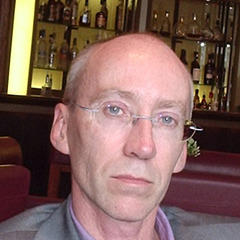
Steven Erikson
Steven Erikson

Steven Erikson (born October 7, 1959) is a renowned Canadian novelist, best known for his epic fantasy series Malazan Book of the Fallen. Born in Toronto, he holds a background in archaeology and anthropology, having worked on archaeological projects in Canada and the UK. Erikson's writing is characterized by complex world-building, multi-perspective narratives, and profound philosophical themes, blending history, mythology, and human nature. The Malazan series is widely regarded as a landmark in modern fantasy literature, influencing countless readers and writers. His works have been nominated for major awards, including the World Fantasy Award and the British Fantasy Award. more

You May Also Like

“На поминках по моему отцу за одним столом в первый и последний раз встретились две ветви моей семьи — дед по матери, уроженец юга Украины и выпускник техникума, сталинист, ветеран Финской и Великой Отечественной, и двоюродная бабушка по отцу, яркий представитель московской еврейской интеллигенции, доктор наук, муж которой чудом не попал в лагерь. В какой-то момент речь зашла о репрессиях — семья отца была репрессирована, его отец погиб в лагере, а сам он провел несколько лет в ссылке. И произошла удивительная вещь. Оказалось, что эти два человека прожили свои жизни в разных странах, никак не пересекавшихся друг с другом. Дед, по его словам, не знал о репрессиях, их, скорее всего, и не было. А в той стране, где жила бабушка, все всё знали с 20-х годов, и аресты и лагеря были, в общем, главной реальностью, в которой существовали она и ее круг. Тот разговор за столом со всей очевидностью продемонстрировал то, что абстрактно кажется невероятным. Объективной реальности прошлого не существует. Ее формирует память, а память необъективна. Но гораздо важнее, что такое неопределенное прошлое, в свою очередь, формирует настоящее. Замороженная и «непредсказуемая» история страны с двоящейся памятью оборачивается двоящейся реальностью в настоящем. Такая раздвоенность чревата, в лучшем случае, «просто» невозможностью двигаться вперед, в худшем — гражданской войной.”

“My husband and I have always been good at creative visualization. Before we quit drugs and got married he’d place tabs of acid on his eyes to see things that weren't there. I'd lay blank sheets of photographic paper on the cornea of developing solution to conjure images. We'd always coaxed dreams from paper, and believed them.”

“You realized you were surrounded by love, that you were held by love, and that you’d had too small an imagination about that word, that thing. Romantic love, absolutely. Our notion of love— it just seems a very unevolved and very unenlightened notion. That it’s this one person who you will meet. Eve Ensler”