Quotessence
Home / Quotes / Quote by Richard Bach

Quote by Richard Bach

Work

Running from Safety: An Adventure of the Spirit

Browse quotes and source details for this work. more

Author
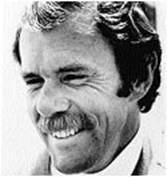
Richard Bach
Richard Bach

Richard Bach is an American writer known for his profound philosophical thoughts and allegorical stories. His work 'Illusions: The Adventures of a Reluctant Messiah' has become a beloved classic, inspiring many to seek self-realization and the meaning of life. more

You May Also Like

“White liberals, instead of comparing what has happened to the black family since the liberal welfare state policies of the 1960s were put into practice, compare black families to white families and conclude that the higher rates of broken homes and unwed motherhood among blacks are due to “a legacy of slavery.” But why the large-scale disintegration of the black family should have begun a hundred years after slavery is left unexplained. Whatever the situation of the black family relative to the white family, in the past or the present, it is clear that broken homes were far more common among blacks at the end of the twentieth century than they were in the middle of that century or at the beginning of that century —even though blacks at the beginning of the twentieth century were just one generation out of slavery. The widespread and casual abandonment of their children, and of the women who bore them, by black fathers in the ghettos of the late twentieth century was in fact a painfully ironic contrast with what had happened in the immediate aftermath of slavery a hundred years earlier, when observers in the South reported desperate efforts of freed blacks to find family members who had been separated from them during the era of slavery.”

“I still carry the weight of being a rape survivor, and of the demand that I forgive and forget to uphold the myth of the perfect black family. I carry the weight handed to me by the Black moral majority, who ignored my father's crimes and who knows how many other men's, who tried to buy off a terrified thirteen year old with a one-day trip to an amusement park. They were so desperate to project the image of the respectable, righteous, picture-perfect Black family to the world that they were willing to let women and girls in the picture suffer.”

“We are slowly reshaping womanhood in a modern generation, breaking free from the cycles of Black generational woman trauma. Grounded in the beauty of our ancestors' strengths, we embrace a shift, letting go of what no longer serves us. In our collective strength, we wield the power to flourish despite adversity, emerging as empowering forces to be reckoned with.”

“The sexuality and reproductive capacities of enslaved women were central to understanding the expanding legal conception of slavery and its inheritability. Slavery conscripted the womb, deciding the fate of the unborn and reproducing slave property by making the mark of the mother a death sentence for her child. The negation or disfigurement of maternity, writes Christina Sharpe, “turns the womb into a factory reproducing blackness as abjection and turning the birth canal into another domestic middle passage.” Partus sequitur ventrem—replicates the fate of the slave across generations. The belly is made a factory of production incommensurate with notions of the maternal, the conjugal or the domestic. In short, the slave exists out of the world and outside the house.”

“The rules of the game are different in society for minorities, as we live in the figurative “basement” of this world, the floor beneath the first level. It is a floor where you become acclimated to the struggle to be treated equally in education, employment, housing, and more. It becomes a normal part of your life and your reality. So when times get difficult for a Black person, there is no sensation of “the sky is falling” because the truth is, the sky never got off the ground on our side of town anyway.”

“Many of us came from homes in which we did not feel loved during the adolescent years. It doesn’t mean we weren’t loved but we didn’t always feel it. Because of that, we may have searched for love in other areas and that also causes us to show up as clingy and needy in romantic relationships.”