Quotessence
Home / Quotes / Quote by Neil Gaiman

Quote by Neil Gaiman

“Being brave doesn't mean you aren't scared. Being brave means you are scared, really scared, badly scared, and you do the right thing anyways.”

Quote by Neil Gaiman

Work

Coraline

Coraline is a fantasy novel that explores themes of identity, family, and the fear of the unknown. The story follows Coraline, a young girl who moves to a new home and discovers a parallel world where she is desired by a mother figure who is eerily similar to her own. As Coraline navigates this strange new world, she must confront her deepest fears and decide whether to return to her real life. more
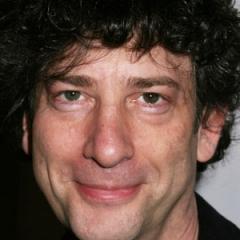
Author

Neil Gaiman
Neil Gaiman

Neil Gaiman, born on November 10, 1960, is a renowned British author. His works span across various genres including fantasy, horror, and science fiction, with notable titles such as 'American Gods' and 'Good Omens'. Gaiman's writing style is distinctive and has won him a dedicated fan base. more

You May Also Like

“That was the first thing that struck him: although he had never given people cause to doubt his integrity, they were ready to bet on his dishonesty rather than on his virtue. The second thing that struck him was their reaction to the position they attributed to him. I might divide it into two basic types: The first type of reaction came from people who themselves (they or their intimates) had retracted something, who had themselves been forced to make public peace with the occupation regime or were prepared to do so (unwillingly, of course—no one wanted to do it). These people began to smile a curious smile at him, a smile he had never seen before: the sheepish smile of secret conspiratorial consent. It was the smile of two men meeting accidentally in a brothel: both slightly abashed, they are at the same time glad that the feeling is mutual, and a bond of something akin to brotherhood develops between them. Their smiles were all the more complacent because he had never had the reputation of being a conformist. His supposed acceptance of the chief surgeon's proposal was therefore further proof that cowardice was slowly but surely becoming the norm of behavior and would soon cease being taken for what it actually was. He had never been friends with these people, and he realized with dismay that if he did in fact make the statement the chief surgeon had requested of him, they would start inviting him to parties and he would have to make friends with them. The second type of reaction came from people who themselves (they or their intimates) had been persecuted, who had refused to compromise with the occupation powers or were convinced they would refuse to compromise (to sign a statement) even though no one had requested it of them (for instance, because they were too young to be seriously involved). . . . And suddenly Tomas grasped a strange fact: everyone was smiling at him, everyone wanted him to write the retraction; it would make everyone happy! The people with the first type of reaction would be happy because by inflating cowardice, he would make their actions seem commonplace and thereby give them back their lost honor. The people with the second type of reaction, who had come to consider their honor a special privilege never to be yielded, nurtured a secret love for the cowards, for without them their courage would soon erode into a trivial, monotonous grind admired by no one.”