Quotessence
Home / Quotes / Quote by Agatha Christie

Quote by Agatha Christie

“In our bedroom I chose curtains of bluebells, which was not really a good choice, because since this particular room faced north the sun seldom shone through. The only time they were pretty was when one lay in bed in mid-morning and saw the light shining through them, pulled back on either side of the window, or seen at night, the blue rather faded out. In fact, it was like bluebells in nature. As soon as you bring them into the house they turn grey and dispirited. and refuse to hold up their heads. A bluebell is a flower that refuses to b captured and is only gay when it is in the woods.”

Quote by Agatha Christie

Work

Agatha Christie: An Autobiography

Agatha Christie: An Autobiography is a candid look into the life of the famous British author. The book covers her early years, her writing career, and personal anecdotes, providing a comprehensive view of her life and the factors that influenced her work. more

Author
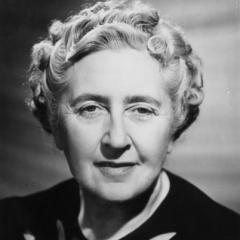
Agatha Christie
Agatha Christie

Agatha Christie, a renowned British detective novel writer, is known as the Queen of Detective Fiction. She was born on September 15, 1890, and passed away on January 12, 1976. Christie's works are characterized by intricate plots, unique reasoning, and vivid characters, and have had a profound impact on detective fiction worldwide. more

You May Also Like

“Dina looked up and found herself in a quiet glade, though that was the only thing her eyes could make sense of. Sunlight, much brighter than the tepid dawn, beat down through a circle of sky above her, a deep summer blue. Her skin prickled with an awareness that magic was at work here, though she wasn't sure if it was a witch's or the woodland itself. The entire glade was impossibly carpeted with bluebells. It was November, they shouldn't have been in bloom. But there they were, a dense meadow of bluish-purple flowers swaying in the breeze before her eyes. Impossible. Magical.”

“To preserve the benefits of what is called civilized life, and to remedy at the same time the evil which it has produced ,ought to be considered as one of the first objects of reformed legislation. Whether that state that is proudly, perhaps erroneously, called civilization, has most promoted or most injured the general happiness of man is a question that may be strongly contested. On one side, the spectator is dazzled by splendid appearances; on the other, he is shocked by extremes of wretchedness; both of which it has erected. The most affluent and the most miserable of the human race are to be found in the countries that are called civilized. To understand what the state of society ought to be, it is necessary to have some idea of the natural and primitive state of man; such as it is at this day among the Indians of North America. There is not, in that state, any of those spectacles of human misery which poverty and want present to our eyes in all the towns and streets in Europe. Poverty, therefore, is a thing created by that which is called civilized life. It exists not in the natural state. On the other hand, the natural state is without those advantages which flow from agriculture, arts, sciences and manufactures. -Agrarian Justice”

“Nothing more sharply reflects the inner contradictions in the emotional world of chivalry than its equivocal attitude to love, which combined the highest spiritualization with extreme sensuality. But illuminating as is a psychological analysis of the equivocal nature of these emotions, the psychological facts are a product of historical circumstances which in turn require explanation and can only be explained sociologically. The psychological mechanism of this attachment to the wife of another, and of this intensification of emotion through the freedom with which it could be expressed, could never have been set in motion without the force of ancient religious and social taboos having first been weakened and the soil prepared for such an exuberant growth of erotic feelings by the rise of a new emancipated upper class. In this case, too, psychology, as so often, is only unclear, disguised, incompletely worked-out sociology.”