Quotessence
Home / Quotes / Quote by Frank Herbert

Quote by Frank Herbert

“Most discipline is hidden discipline, designed not to liberate but to limit. Do not ask Why? Be cautious with How? Why? leads inexorably to paradox. How? traps you in a universe of cause and effect. Both deny the infinite.”

Quote by Frank Herbert

Work

Heretics of Dune

In this science fiction novel, readers are taken on a journey through the intricate universe of Frank Herbert's Dune series. The narrative delves into the formation of a new religious movement, offering a unique perspective on the established power structures and the quest for spiritual enlightenment. The story is rich with political intrigue, philosophical musings, and the exploration of the human condition in a futuristic setting. more
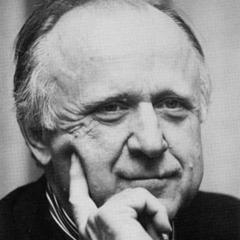
Author

Frank Herbert
Frank Herbert

Frank Herbert, born on October 8, 1920, was an influential science fiction author from the United States. His masterpiece 'Dune' is considered a classic in the science fiction genre and has had a profound impact on literature and society. more

You May Also Like

“At the quantum level our universe can be seen as an indeterminate place, predictable in a statistical way only when you employ large enough numbers. Between that universe and a relatively predictable one where the passage of a single planet can be timed to a picosecond, other forces come into play. For the in-between universe where we find our daily lives, that which you believe is a dominant force. Your beliefs order the unfolding of daily events. If enough of us believe, a new thing can be made to exist. Belief structure creates a filter through which chaos is sifted into order.”

“Then on the River I saw the dream-built ship of the god Yoharneth-Lehai, whose great prow lifted grey into the air above the River of Silence. Her timbers were olden dreams dreamed long ago, and poets' fancies made her tall, straight masts, and her rigging was wrought out of the people's hopes. Upon her deck were rowers with dream-made oars, and the rowers were the people of men's fancies, and princes of old story and people who had died, and people who had never been.”

“Queen and huntress, chaste and fair, Now the sun is laid to sleep, Seated in thy silver chair, State in wonted manner keep: Hesperus entreats thy light, Goddess excellently bright. Earth, let not thy envious shade Dare itself to interpose, Cynthia's shining orb was made Heaven to clear when day did close: Bless us then with wished sight, Goddess excellently bright. Lay thy bow of pearl apart, And thy crystal-shining quiver, Give unto the flying hart Space to breath, how short soever: Thou that mak'st a day of night- Goddess excellently bright.”

“I mean,” he said, “that by your own showing, the greatest threat to heaven comes from within the ranks of the angels themselves. Before you can prove to me that heroes can defeat villains with nothing but the purest chivalric ideals, you must convince me that heroes do exist, and that villains are not a fanciful tale for children. You must tell me, sir, if you dare, that you are incorruptible, and that your colleagues and commanders are as pure as you.”

“Most people don’t get their soul mates in their designated lifetime or if ever they do, they let them go. It doesn’t matter to me who you are, who you love, as long as they love you back. That is what’s important. The world seems to have forgotten that and have conducted themselves all based on the concept of love that is both selfish, misguided and outdated. And if the world saw what we see, things would be a whole lot better.”

“The mythology of a people is far more than a collection of pretty or terrifying fables to be retold in carefully bowdlerized form to our schoolchildren. It is the comment of the men of one particular age or civilization on the mysteries of human existence and the human mind, their model for social behaviour, and their attempt to define in stories of gods and demons their perception of the inner realities. We can learn much from the mythologies of earlier peoples if we have the humility to respect ways of thought widely differing from our own. In certain respects we may be far cleverer than they, but not necessarily wiser. We cannot return to the mythological thinking of an earlier age; it is beyond our reach, like the vanished world of childhood. Even if we feel a nostalgic longing for the past, like that of Jon Keats for Ancient Greece of William Morris for medieval England, there is now no way of entry. The Nazis tries to revive the myths of ancient Germany in their ideology, but such an attempt could only lead to sterility and moral suicide. We cannot deny the demands of our own age, but this need not prevent us turning to the faith of another age with sympathetic understanding, and recapturing imaginatively some of its vanished power. It will even help us view more clearly the assumptions and beliefs of our own time”