Quotessence
Home / Quotes / Quote by David Peace

Quote by David Peace

“For the first time my prayers were not for me but for everyone else, that all of those things in my notebooks, on all of those tapes, in all of those envelopes and bags in my room, that none of them were true, that the dead were alive and the lost were found, and that all of those lives could be lived anew.”

Quote by David Peace

Work

Nineteen Seventy-Four

Browse quotes and source details for this work. more

Author
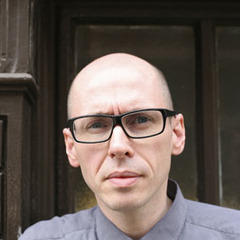
David Peace
David Peace

David Peace is a British writer renowned for his fiction and non-fiction works. Born in 1967, Peace has made a name for himself with his distinctive narrative style, which intertwines historical and contemporary themes. His writing frequently examines the intricacies of human nature and societal issues. more

You May Also Like

“No one escapes a time in life when the arrow of sorrow, of anger, of despair pierces the heart. For many of us, there is the inevitable need to circle the wound. It is often such a surprise to find it there, in us, when we had assumed arrows so painful only landed in the hearts of other people. Some of us spend decades screaming at the archer. Or at least for longer periods than are good for us. How to take the arrow out of the heart? How to learn to relieve our own pain? That is the question.”

“It was as though she had reached some state of acceptance about life–that if there was a bad experience, there wouldn’t only be bad experiences. She realized that she hadn’t tried to end her life because she was miserable, but because she had managed to convince herself that there was no way out of her misery. That, she supposed, was the basis of depression as well as the difference between fear and despair. Fear was when you wandered into a cellar and worried that the door would close shut. Despair was when the door closed and locked behind you.”

“The future does not consist of simply a state of time which is going to occur, but contains the element, “I will make it so.” Power is potentiality, and potentiality points toward the future: is something to be realized. The future is the tense in which we promise ourselves, we give a promissory note, we put ourselves on the line. Nietzsche's statement, “Man is the only animal who can make promises,” is related to our capacity to posit ourselves in the future. We are reminded here also of William James's fiat, “Let it be so.” The hopelessness of many patients, which may be expressed in depression, despair, feelings of “I can't,” and related helplessness, can be usefully seen, from one point of view, as the inability to see or construct a future.”