Quotessence
Home / Quotes / Quote by John Howard Griffin

Quote by John Howard Griffin

“Eventually, some black thinkers believe, this "separation" may be the shortest route to an authentic communication at some future date when blacks and whites can enter into encounters in which they truly speak as equals and in which the white man will no longer load every phrase with unconscious suggestions that he has something to "concede" to black men or that he wants to help black men "overcome" their blackness.”

Quote by John Howard Griffin

Work

Black Like Me

Browse quotes and source details for this work. more

Author

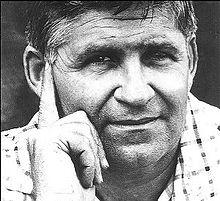
John Howard Griffin
John Howard Griffin

John Howard Griffin was an influential American journalist and writer, best known for his 1961 work 'Black Like Me', which documented his experience of passing as a black man to expose the harsh realities of racial segregation. His work had a profound impact on racial equality and social justice. more

You May Also Like

“Apa yang akan terjadi padaku kalau aku harus meninggalkanmu ya?" Dia bertanya, dengan nada seolah tidak membutuhkan jawaban. "Tidakkah kau mau bertanya yang sebaliknya?" Joon menawarkan, dan gadis itu meminta penjelasan lewat pandangan. "Kenapa kau tidak bertanya bagaimana aku kalau kau pergi? Tidak penasaran?" Kali ini, gadis itu ternganga. "Karena mungkin saja," lanjut pria itu, "aku akan sama menderitanya sepertimu.”

“Falling out of love is a lot harder than falling in love. When you fall in love, everything is beautiful—flowers bloom, music plays, and every star in the sky is winking at you. But falling out of love is like finding yourself in a pitch-black tunnel. At first you think in time you’ll get through it, and then you realize how terribly long the tunnel is. I’m starting to see pinpricks of light ahead, so I might be coming to the end, but I’m not there yet.”

“When the last autumn of Dickens's life was over, he continued to work through his final winter and into spring. This is how all of us writers give away the days and years and decades of our lives in exchange for stacks of paper with scratches and squiggles on them. And when Death calls, how many of us would trade all those pages, all that squandered lifetime-worth of painfully achieved scratches and squiggles, for just one more day, one more fully lived and experienced day? And what price would we writers pay for that one extra day spent with those we ignored while we were locked away scratching and squiggling in our arrogant years of solipsistic isolation? Would we trade all those pages for a single hour? Or all of our books for one real minute?”

“They have done me so much wrong. I have found no rest since the day I left Lahore. See these eyes, they are of little use now. See these hands of mine, they tremble. My skin looks now like a shrivelled date. Though my Waheguru knows, that despite these physical infirmities, a rare strength wells up within me when I think of Duleep and Lahore.”

“Whereas during those months of separation time had never gone quickly enough for their liking and they were wanting to speed its flight, now that they were in sight of the town they would have liked to slow it down and hold each moment in suspense, once the breaks went on and the train was entering the station. For the sensation, confused perhaps, but none the less poingant for that, of all those days and weeks and months of life lost to their love made them vaguely feel they were entitled to some compensation; this present hour of joy should run at half the speed of those long hours of waiting.”