Quotessence
Home / Quotes / Quote by Albert Camus

Quote by Albert Camus

“Whereas during those months of separation time had never gone quickly enough for their liking and they were wanting to speed its flight, now that they were in sight of the town they would have liked to slow it down and hold each moment in suspense, once the breaks went on and the train was entering the station. For the sensation, confused perhaps, but none the less poingant for that, of all those days and weeks and months of life lost to their love made them vaguely feel they were entitled to some compensation; this present hour of joy should run at half the speed of those long hours of waiting.”

Quote by Albert Camus

Work

The Plague

Albert Camus' classic work delves into the human condition during a devastating epidemic, examining themes of hope, despair, and the struggle for meaning in the face of tragedy. more

Author

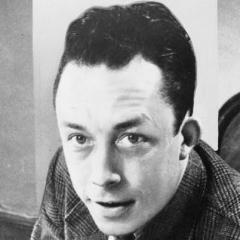
Albert Camus
Albert Camus

Albert Camus was a French author and philosopher, born on November 7, 1913, and died on January 4, 1960. Known for his unique existentialist philosophy and profound insights into human suffering, Camus' works include 'The Stranger', 'The Plague', and 'The Myth of Sisyphus', which have had a profound impact on 20th-century literature. more

You May Also Like

“In China, we say: 'There are many dreams in a long night.' It has been a long night, but I don't know if I want to continue the dreams. It feels like I am walking on a little path, both sides are dark mountains and valleys. I am walking towards a little light in the distance. Walking, and walking, I am seeing that light diminishing. I am seeing myself walk towards the end of the love, the sad end. I love you more than I loved you before. I love you more than I should love you. But I must leave. I am losing myself. It is painful that I can't see myself. It is time for me to say those words you kept telling me recently. 'Yes, I agree with you. We can't be together.”

“Morini might have called Norton, but before his friends set off on their search for Archimboldi, he, in his own way, like Schwob in Samoa, had already begun a voyage, a voyage that would end not at the grave of a brave man but in a kind of resignation, what might be called a new experience, since this wasn't resignation in any ordinary sense of the word, or even patience or conformity, but rather a state of meekness, a refined and incomprehensible humility that made him cry for no reason and in which his own image, what Morini saw as Morini, gradually and helplessly dissolved, like a river that stops being a river or a tree that burns on the horizon, not knowing that it's burning”