“In the "Republic," Plato vigorously attacked the oral, poetized form as a vehicle for communicating knowledge. He pleaded for a more precise method of communication and classification ("The Ideas"), one which would favor the investigation of facts, principles of reality, human nature, and conduct. What the Greeks meant by "poetry" was radically different from what we mean by poetry. Their "poetic" expression was a product of a collective psyche and mind. The mimetic form, a technique that exploited rhythm, meter and music, achieved the desired psychological response in the listener. Listeners could memorize with greater ease what was sung than what was said. Plato attacked this method because it discouraged disputation and argument. It was in his opinion the chief obstacle to abstract, speculative reasoning - he called it "a poison, and an enemy of the people.”
Quote by Marshall McLuhan
Work
The Medium is the Massage
Browse quotes and source details for this work. more
Author
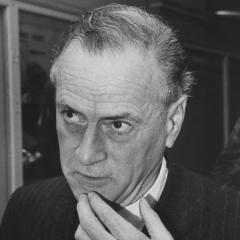
Marshall McLuhan
Marshall McLuhan was a renowned Canadian philosopher, communication theorist, and media theorist whose theories had a profound impact on modern media and communication technologies. His famous 'The Medium is the Message' theory, among others, has influenced the fields of advertising, film, television, and the internet. more
You May Also Like
Source: The Republic
Source: The Republic
Source: Republic, Books 1-2
“the true ruler is not meant by nature to regard his own interest, but that of his subjects”
Source: The Republic
Source: The Just City
Source: Take a Bow
Source: The Letters of J.R.R. Tolkien
“How do you know, what you claim to know?”
Source: Your Mind at Siege : Exploring the Conundrum of Consciousness, Artificial Intelligence through the Lens of The Diamond Sutra
Source: Unrequited Echoes