Quotessence
Home / Quotes / Quote by Diana Wynne Jones

Quote by Diana Wynne Jones

“Entry: Barbary Vikings Where horned Helmets and fur Cloaks; otherwise you could misstake them for Northern Barbarians. They swagger hughly, quarrel hughly, drink hughly and boast hughly. They thing they like the best is killing people, particulary lots at once. If a Barbary viking goes berserk, he will kill even more freely. Stand clear if one does. All of them are excelent seamen. Their Boats have square sails and lines of Shields down the sides. Quite often, the Managment employs them as Pirates because they are good at raping and looting and burning. But on some Tours they appears as allies of a rather wilful kind, and will take Tourist for a sail. At home, which are somewhere quite northerly, they have a King, who is Good and to whom they are viciously loyal, and they womenfolk whom you scarly se at all because they are all at home berring warrios. Barbary vikings are even maler then Anglo-Saxoon cossacks.”

Quote by Diana Wynne Jones

Work

The Tough Guide to Fantasyland

Browse quotes and source details for this work. more

Author
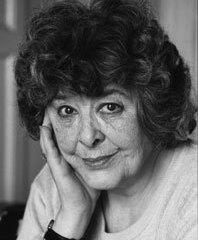
Diana Wynne Jones
Diana Wynne Jones

Diana Wynne Jones, a renowned British fantasy writer, was born on August 16, 1934, in Wales, UK, and passed away on March 26, 2011. Her works are known for their imaginative storytelling, deep themes, and richly developed characters, particularly in the realm of young adult fantasy literature. Notable works include 'The Magicians' Assistant' and 'The Time of the Ghost'. more

You May Also Like

“Since men who become embittered never win respect or admiration, those who sought fame did not rail at the undoubted hardship of their lives and the inevitability of death. Rather, they endured it or, even better, laughed at it. This accounts for the ironic tone in the fabric of the myths and explains, for example, the reaction of the gods when Tyr sacrificed his hand (Myth 7) in the interests of binding the wolf Fenrir. Men and women expected their share of trouble and the best of them attempted to use it, to rise above it and carve out a name for themselves through bravery and loyalty and generosity.”

“But Odin had a trick up his sleeve. For his final question to Vafthrudnir, he asked, "And what, wise giant, did Odin whisper in the ear of Balder, before that great son of his was burned on the funeral pyre?" Vafthrudnir became livid with rage. "Now I see who you really he said grimly, "for only Odin himself could know the answer that question." He clenched his teeth and his fists, and closed his eyes. When he opened them, however, his face had an expression of melancholy acceptance, and he said, "Now for the first time in my life I have lost a contest of lore. But my consolation will be that I lost it to Odin, the most knowledgeable being there is.”

“In the year 0982, Gunnbjorn Ulfsson reported that he had journeyed to another land having fertile green fields, about 200 miles to the west of Iceland. Out of duress, Eric the Red now 32 years old, decided to uproot his family and move there. Eric and his family sailed the treacherous distance between the two landmasses safely and named the new location Greenland. He chose this name because it reflected the grassy, valleys he discovered during this warm period of the island’s history. Three years later when he could return to Iceland, he told astounding stories about where he and his family had settled. His stories must have sounded inviting since they encouraged many other settlers to join them there, especially considering that a famine had devastated Iceland. Not knowing any better, they had severely overworked the cold soil in Iceland, putting their very existence into jeopardy. Knowing that they could not survive another winter, 980 people on 25 boats left for the arduous journey to Greenland. It must have been a cold, rough crossing because only 14 boats succeeded in making it. However, Eric later learned that some of the boats had survived and had managed to return safely to Iceland. In time, there were about 5,000 settlers in Greenland. The official records indicate that two sizable Norse settlements had been founded in fjords on the southwestern coast of the island. Other smaller ones were located on the same coast as far north as present day Nuuk. Most of the settlements which were founded in about the year 1,000, remained inhabited until well into “The Little Ice Age,” which started in 1350 and lasted for approximately 500 years. In the beginning when the weather was considerably warmer, about 400 farms were started by the Viking farmers. However later, the extreme cold and glacial ice made farming nearly impossible in these frigid northern latitudes. Recently, archaeologists discovered a Viking village that was radiocarbon dated back to circa 1430.”

“This superstitious, family-oriented existence is the background to 'The Lay of Loddfafnir' and the whole of Havamal (Myth and Note25). This great compendium of aphorisms and advice on right conduct offers a commonsensical and sober (though sometimes witty) picture of the day to day life of the Norsemen, and it is a far cry from the heady image of Vikings on the rampage. Value life itself; censure naivete; cherish and celebrate friendships; beware treachery; practice moderation; be hospitable (but not too hospitable); try to win the fame and good name that will outlive you: these are the leitmotifs of the Havamal.”

“Yet, in H.R Ellis Davidson's wise words: In spite of this awareness of fate, or perhaps because of it, the picture of man's qualities which emerges from the myths is a noble one. The gods are heroic figures, men writ large, who led dangerous, individualistic lives, yet at the same time were part of a closely-knit small group, with a firm sense of values and certain intense loyalties. They would give up their lives rather than surrender these values, but they would fight on as long as they could, since life was well worth while. Men knew that the gods whom they served could not give them freedom from danger and calamity, and they did not demand that they should. We find in the myths no sense of bitterness at the harshness and unfairness of life, but rather a spirit of heroic resignation: humanity is born to trouble, but courage, adventure, and the wonders of life are matters of thankfulness, to be enjoyed while life is still granted to us. The great gifts of the gods were readiness to face the world as it was, the luck that sustains men in tight places, and the opportunity to win that glory which alone can outlive death. Reading the myths, we can identify the Norseman's spirit and confidence, his boundless curiosity, extreme bravery, clannish loyalty, generosity and discipline; we can also detect his arrogance and lack of compassion, his cunning if not treachery (amply reflected in the figure of Loki), his ruthlessness and his cruelty.”