“While the noble man lives in trust and openness with himself (gennaios 'of noble descent' underlines the nuance 'upright' and probably also 'naïve'), the man of ressentiment is neither upright nor naive nor honest and straightforward with himself. His soul squints; his spirit loves hiding places, secret paths and back doors, everything covert entices him as his world, his security, his refreshment; he understands how to keep silent, how not to forget, how to wait, how to be provisionally self-deprecating and humble. A race of such men of ressentiment is bound to become eventually cleverer than any noble race; it will also honor cleverness to a far greater degree: namely, as a condition of existence of the first importance; while with noble men cleverness can easily acquire a subtle flavor of luxury and subtlety—for here it is far less essential than the perfect functioning of the regulating unconscious instincts or even than a certain imprudence, perhaps a bold recklessness whether in the face of danger or of the enemy, or that enthusiastic impulsiveness in anger, love, reverence, gratitude, and revenge by which noble souls have at all times recognized one another. Ressentiment itself, if it should appear in the noble man, consummates and exhausts itself in an immediate reaction, and therefore does not poison: on the other hand, it fails to appear at all on countless occasions on which it inevitably appears in the weak and impotent.”
Quote by Friedrich Nietzsche
Work
On the Genealogy of Morals / Ecce Homo
Browse quotes and source details for this work. more
Author
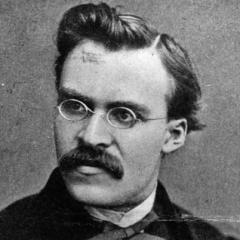
Friedrich Nietzsche
Friedrich Nietzsche was a German philosopher, cultural critic, poet, and writer whose works have had a profound impact on subsequent philosophy, literature, and thought. His ideas revolve around concepts such as the 'will to power', the 'Übermensch', and the 'eternal recurrence'. more
You May Also Like
Source: On the Genealogy of Morals / Ecce Homo
Source: Inversions
Source: The Illusion of the End
Source: Echopraxia
“The average person looks to be taught by the mediocre, not the excellent.”
Source: The Irresistible Rise of Mediocre Man: The War On Excellence
Source: The Infallible Word of God: 365 Inspirational Quotes
Source: Looking After Joey
“In my head, Julie Andrew sings and spins on an Austrian mountainside.”