Quotessence
Home / Quotes / Quote by Zora Neale Hurston

Quote by Zora Neale Hurston

Author

Zora Neale Hurston
Zora Neale Hurston

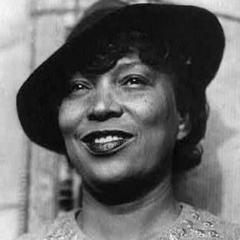
Zora Neale Hurston (1891-1960) was an American anthropologist, folklorist, and novelist who played a pivotal role in the Harlem Renaissance. Born in Alabama and raised in Eatonville, Florida, she became the first African American student at Barnard College, Columbia University, studying under Franz Boas. Hurston is best known for her novel "Their Eyes Were Watching God," now considered a classic of American literature. She conducted extensive anthropological fieldwork in the American South and Caribbean, preserving African American folk traditions. Though largely forgotten after her death, her work was revived by Alice Walker in the 1970s, establishing her as a foundational figure in African American literature and anthropology. more

You May Also Like

“The condition of being alienated and "othered" reflects the ways in which navigating Western societies as a Black person is an endlessly unsettling experience, something that might be ripped whole from the pages of a speculative novel. Because of this, the search for lost cultural touchstones is a gesture towards survival: it is an Afrofuturistic act. At its heart it is the creation of a possible future based on a reconstructed, or reimagined past. In this way, a ware is wages against erasure.”

“The time has come to realize that the interracial drama acted out on the American continent has not only created a new black man, it has created a new white man, too. No road whatever will lead Americans back to the simplicity of this European village where white men still have the luxury of looking on me as a stranger. I am not, really, a stranger any longer for any American alive. One of the things that distinguishes Americans from other people is that no other people has ever been so deeply involved in the lives of black men, and vice versa. This fact faced, with all its implications, it can be seen that the history of the American Negro problem is not merely shameful, it is also something of an achievement. For even when the worst has been said, it must also be added that the perpetual challenge posed by this problem was always, somehow, perpetually met. It is precisely this black-white experience which may prove of indispensable value to us in the world we face today. This world is white no longer, and it will never be white again.”

“It’s a fact: black people in this country die more easily, at all ages, across genders. Look at how young black men die, and how middle-aged black men drop dead, and how black women are ravaged by HIV/AIDS. The numbers graft to poverty but they also graph to stresses known and invisible. How did we come here, after all? Not with upturned chins and bright eyes but rather in chains, across a chasm. But what did we do? We built a nation, and we built its art.”