Quotessence
Home / Quotes / Quote by Stephen King

Quote by Stephen King

Work

Later

Browse quotes and source details for this work. more

Author

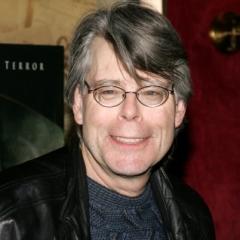
Stephen King
Stephen King

Stephen King, born on September 21, 1947, is a renowned American author. His works primarily focus on horror, fantasy, and science fiction, and have won him a wide audience. King has received numerous literary awards in the United States, including the Edgar Allan Poe Award and the World Fantasy Award. more

You May Also Like

“Time will tell. But we have at least set our calling card on this affair, and even if nothing comes of it, no harm has been done.’ Those were his words. But Holmes had no idea of the type of people with whom he was dealing nor the lengths to which they would go to protect themselves. He had entered a veritable miasma of evil, and harm, in the worst possible way, was to come to us all too soon.”

“The advent of low temperature scanning EM led to a study by Bill Wergin and colleagues from NASA in which they collected samples from different types of snow cover found in the prairies, taiga (snow forest), and alpine environments. With snow depths up to a metre, various layers occurred in which the crystals underwent a change in their microscopic shape from the original freshly fallen crystals, to the development of flat faces and sharp edges. It is this metamorphosis of lying snow that determines the likelihood of avalanches, which can be predicted from the crystal structures at various depths. Although scanning EM (electron microscopy) is hardly available as a routine assay in distant mountain regions, this work helped in the use of microwave radiology investigation of the snow water equivalent in the snow pack, as large snow crystals scatter passive microwave more than small crystals. Smaller and more rounded crystals of snow do not interlock, and can slide more easily over each other, increasing the risk of avalanches.”

“At one end of the scale, astronomers search the heavens for new information about the universe, whilst at the other end, microscopists chase atoms and molecules to study defects in crystals or the basic processes of life. These investigations may be separated by more than twentyfold orders of magnitude, but are nevertheless driven by the same insatiable curiosity of the human psyche to explore beyond the vision of our own eyes.”