Quotessence
Home / Quotes / Quote by Jacques Barzun

Quote by Jacques Barzun

“The obvious part is that the machine makes us its captive servants - by its rhythm, by its convenience, by the cost of stopping it or the drawbacks of not using it. As captives we come to resemble it in our pace, rigidity and uniform expectations. But there is in mechanism a subtler influence. The machine is an agent of abstraction. It is itself an abstraction in that it does one particular task (or at most two or three) and yields identical products. There is no fringe or fancy, no happy error or sudden innovation as in the handworker's performance. That is why machine-made things rarely draw our glance more than the few times when they are new and handy. They induce no subsequent reverie, no speculation, and no love, The robot is a repulsive caricature of Man. When the domestic or public landscape is filled with objects deprived of any aura, it is as if the world of living things had been reduced by abstraction to something emphatically not alive.”

Quote by Jacques Barzun

Work

Author

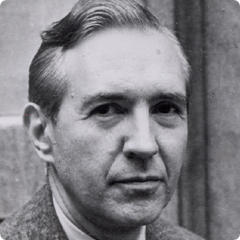
Jacques Barzun
Jacques Barzun

Jacques Barzun was an American historian, born on November 30, 1907, and passed away on October 25, 2012. He was renowned for his profound insights into Western culture, literature, and history, and is considered one of the most important cultural critics of the 20th century. more

You May Also Like

“In our country, it often appears that the government, officials, politicians, law enforcement, and institutions lack the will to effectively combat crime and corruption. This perception is fueled by concerns that some may be complicit or benefiting from these issues. Instead of supporting those who stand against crime and corruption, there are troubling instances where such individuals face resistance or harm, seemingly because they threaten vested interests.”

“The library will endure; it is the universe. As for us, everything has not been written; we are not turning into phantoms. We walk the corridors, searching the shelves and rearranging them, looking for lines of meaning amid leagues of cacophony and incoherence, reading the history of the past and our future, collecting our thoughts and collecting the thoughts of others, and every so often glimpsing mirrors, in which we may recognize creatures of the information.”

“When we make stories, when we turn raw events into personal sagas, parables, tales, and anecdotes, we are often struggling to come to terms with one of the inescapably difficult and puzzling facts of existence. Storytelling is an attempt to deal with and at least partly contain the terrifyingly haphazard quality of life. Large parts of life, sometimes the mots crucial parts, depend on random happenings, contingency. A woman turns a corner, meets a strange man, two years later they marry, they have children together – and in twenty years, there are adults walking the earth who would not have existed if that woman had not turned that corner on that day. The human results of that apparently random event may go on for hundreds or even thousands of years, a single stray moment casting its shadow into an unimaginably long future. We can gaze on this fact with wonder; but we may also grow uneasy in contemplating it, because it emphasizes how little we control the course of our lives”

“The pressure this generation has because of Social Media, cell phones and the Internet, everything they do is being recorded. They think they are not allowed to make mistakes because their mistakes are exaggerated and blown out of proportion. Their good deeds or work are not recognized, gas-lightened, suppressed and thrown under the carpet. That is why most have anxiety and depression.”

“Stop arguing with people you don't know on social media. Foolish ones always think they are the smartest ones. You will be trying to make sense. They will be trying to make content. You will be trying to be reasonable. They will be trying to milk the content. They are rage farming and always trying to provoke you so they can get an engagement. Their objective is to get engagement. Not facts, truth or justice.”