Quotessence
Home / Quotes / Quote by Catherynne M. Valente

Quote by Catherynne M. Valente

Work

The Girl Who Circumnavigated Fairyland in a Ship of Her Own Making

This novel follows a young protagonist as she navigates the wonders and challenges of Fairyland, utilizing her imagination and courage to overcome obstacles and uncover the secrets of her origins. more

Author
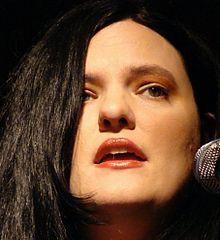
Catherynne M. Valente

Catherynne M. Valente is an American novelist known for her works in fantasy and science fiction. Born on May 5, 1979, she has made a name for herself with her imaginative storytelling and poetic prose. Valente's writing frequently delves into themes of love, loss, and the human experience within fantastical settings. more

You May Also Like

“All of our natural intuitions tell us that Jesus is with us, on our side, present and helping, when life is going well. This text says the opposite. It is in "our weaknesses" that Jesus sympathizes with us. The word for "sympathize" here is a compound word formed from the prefix meaning "with" joined with the verb to suffer. "Sympathize" here is not cool and detached pity. It is a depth of felt solidarity such as is echoed in our own lives most closely only as parents to children. Indeed, it is deeper even than that. In our pain, Jesus is pained; in our suffering, he feels the suffering as his own even though it isn't--not that his invincible divinity is threatened, but in the sense that his heart is feelingly drawn into our distress. His human nature engages our troubles comprehensively. His is a love that cannot be held back when he sees his people in pain.”

“You probably recall the famous statement at the beginning of Anna Karenina, in which Tolstoy, donning there the cloak of a calm village deity and hovering over the void full of benign toleration and loving kindness, declares from on high that all happy families resemble one another, while unhappy families are all unhappy in their own way. With all due respect to Tolstoy I’m telling you that the opposite is true: Unhappy people are mainly plunged in conventional suffering, living out in sterile routine one of five or six threadbare clichés of misery. Whereas happiness is a rare, fine vessel, a sort of Chinese vase, and the few people who have reached it have shaped and formed it line by line over the course of years, each in his own image and likeness, each in his own character, so that no two happinesses are alike. And in the molding of their happiness they have instilled their own suffering and humiliation. Like refining gold from ore. There is happiness in the world, Alec, even if it is more ephemeral than a dream. Indeed in your case it is beyond your reach. As a star is beyond the reach of a mole. Not “the satisfaction of approval,” not praise and advancement and conquest and domination, not submission and surrender, but the thrill of fusion. The merging of the I with another. As an oyster enfolds a foreign body and is wounded and turns it into its pearl while the warm water still surrounds and encompasses everything. You have never tasted this fusion, not once in your whole life. When the body is a musical instrument in the hands of the soul. When Other and I strike root in each other and become a single coral. And when the drip of the stalactite slowly feeds the stalagmite until the two of them become one.”

“Some people express abhorrence at eating meat, yet make an exception for fish and other 'seafood' to remain a part of their diet. Fish, it seems to them, 'don't count.' Nor, it turns out, do they count when it comes to compiling the daily toll of animals slaughtered: cows, chickens, pigs and sheep are counted individually – fish – on the other hand, have their lives measured by the tonne. But even by weight, theirs is a colossal number – over 150million tonnes killed for human consumption every year in the first decades of the 21st century.”

“No set of numbers can tell the whole story, but when it comes to the annual slaughter of farmed animals, the numbers have such an oppressive weight that they can easily overwhelm the stories behind them: 69 billion chickens, 1.5 billion pigs, 656 million turkeys, 574 million sheep, 479 million goats and 302 million cows. In total, 72.5 billion farmed animals were killed for human consumption in 2018. Ten times the global human population, slaughtered every year. Nor does this number include the ducks, rabbits, horses, geese, kangaroos, bison and other land animals killed so that we can eat their meat, And what about the fishes?”