Quotessence
Home / Quotes / Quote by Robert Reich

Quote by Robert Reich

“They call themselves conservatives but that’s not it, either. They don’t want to conserve what we now have. They’d rather take the country backwards – before the 1960s and 1970s, and the Environmental Protection Act, Medicare, and Medicaid; before the New Deal, and its provision for Social Security, unemployment insurance, the forty-hour workweek, and official recognition of trade unions; even before the Progressive Era, and the first national income tax, antitrust laws, and Federal Reserve. They’re not conservatives. They’re regressives. And the America they seek is the one we had in the Gilded Age of the late nineteenth century.”

Quote by Robert Reich

Author
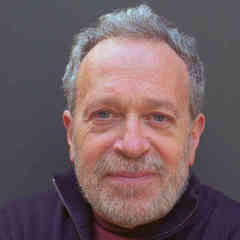
Robert Reich
Robert Reich

Robert Reich, born on June 24, 1946, is a former United States Secretary of Labor. He is an economist, author, and public intellectual, who served as the Secretary of Labor under the Clinton administration. Reich is known for his profound insights into labor markets and economic policies. more

You May Also Like

“People don’t adopt their ideologies at random, or by soaking up whatever ideas are around them. People whose genes gave them brains that get a special pleasure from novelty, variety, and diversity, while simultaneously being less sensitive to signs of threat, are predisposed (but not predestined) to become liberals. They tend to develop certain “characteristic adaptations” and “life narratives” that make them resonate—unconsciously and intuitively—with the grand narratives told by political movements on the left (such as the liberal progress narrative). People whose genes give them brains with the opposite settings are predisposed, for the same reasons, to resonate with the grand narratives of the right (such as the Reagan narrative). Once people join a political team, they get ensnared in its moral matrix. They see confirmation of their grand narrative everywhere, and it’s difficult—perhaps impossible—to convince them that they are wrong if you argue with them from outside of their matrix. I suggested that liberals might have even more difficulty understanding conservatives than the other way around, because liberals often have difficulty understanding how the Loyalty, Authority, and Sanctity foundations have anything to do with morality. In particular, liberals often have difficulty seeing moral capital, which I defined as the resources that sustain a moral community.”

“It is easier and much more satisfying to rail against the Right than to suggest that we go back to Genesis 1 and study together. Liberals can be just as intolerant as fundamentalists, and we have arrived at a moment in human history when intolerance and hope are mutually exclusive. (p. 6)”

“In 1959, Vice-President Nixon, speaking to members of California’s Commonwealth Club, was asked if he’d like to see the parties undergo an ideological realignment—the sort that has since taken place—and he replied, “I think it would be a great tragedy . . . if we had our two major political parties divide on what we would call a conservative-liberal line.” He continued, “I think one of the attributes of our political system has been that we have avoided generally violent swings in Administrations from one extreme to the other. And the reason we have avoided that is that in both parties there has been room for a broad spectrum of opinion.” Therefore, “when your Administrations come to power, they will represent the whole people rather than just one segment of the people.”

“Before Trump, conservatives seeking to appeal to Latinos typically embraced the politics of conservative multiculturalism. Politicians such as George W. Bush reached out to Latino voters by showing a familiarity with their language and history, emphasizing the values of diversity and inclusion. Depicting Latinos as a distinct and valuable part of America’s democratic mosaic, conservative multiculturalism connected Latino culture to Republican values, emphasizing conservative approaches to faith, patriotism and the traditional family. Trump, by contrast, knows nothing of the history of Latinos in the United States and rarely even pretends to find value in Latinos’ distinct identities. Rather than offering his non-White voters recognition, Trump has offered them multiracial whiteness.”

“And I've noticed that the people in the ultraconservative extremist right, right now, have built a new metanarrative around America. And it started with the rise of the election of Donald Trump. But that metanarrative was anyone who does not see strength in America is weak. Anyone who opposes us is an enemy. Anyone who gets in our way will be trampled. We will not govern as a nation of equals. We will govern over and rule over people. Democracy is losing the metanarrative story.”

“Inevitably there would be a complaint about dark faces, moving around neighborhoods where they didn't belong, and then another about gay teachers, making queers of their students. A world turned on its head! Tradition being destroyed! A way of life at stake! It didn't matter if it was about headscarves in the Marais, or a fight about bathrooms in North Carolina--the complaint was always the same. Toxic nostalgia porn, is how Nancy likes to describe it. Men who get off by sticking their heads in the sand. Who swear the future is destroying their country, as they pick bones from their teeth.”