“Anyhow, I've begun on the story we discussed. I will not refer specifically to what you said, but I've decided that it will have as its author Hawthorne Abendsen, the novelist in my novel MAN IN THE HIGH CASTLE who wrote THE GRASSHOPPER LIES HEAVY. I wrote & wrote . . . after all, I wrote my 4th novel EYE IN THE SKY in two weeks, so this merely shows I'm in love with what I'm doing. The title of Abendsen's yarn is, "A Man For No Countries," because he is unwanted in the USA where the Asshole Axis rule, and certainly not in Europe where Germany rules from . . . I did bio notes, the uncorrected carbons of which I'm enclosing; they were improved in a second draft, and can/will be cut as needed. And, as to the story, I finished the holographic first draft last night about the time our tomcat Pinky wants indoors to be fed, which is quite late, and at which time nothing, even Pinky, gets me out of bed. It is a short story, but I think a lot of it, Phil. I really do, and when I turn out a lousy one I usually know it and the other way around. I'll send you a carbon of the final, not of the rough, since the rough is in holo. Now, a technical problem. To whom do I send the yarn when I'm done? By contract, it must be to Scott Meredith; that is determined by law. But my own name must be on it, on the far left upper corner, not under the title, so he can see who sent it, and hence pay me. That is, receive pay. Who does pay, by the way? Ed Ferman or whoever buys it (if anyone)? Does it just go onto the market like all stories, OR—and this is crucial, maybe—should I mention to Scott Meredith that you should be involved . . . without mentioning certain details held in confidence between us? How do I handle it? I will sell it, in any case; I wrote MAN IN THE HIGH CASTLE in 1961 and ever since "they" have begged (well, asked me) to do more as a sequel. This story is in fact a follow-up, of Abendsen's life since, besides being an intrinsic plot-idea-theme story. So it'll sell, and Ed Ferman does like my stuff; he has commissioned a set of three stories from me, the last three I have done, including one for FINAL STATE or EDGE or whatever with Malzberg, and so would tend to want to buy it. So advise me, as I type up the final. And thanks for getting my literary ass in gear; God bless, Phil. [The story was never completed or published.]”
Quote by Philip K. Dick
Work
The Selected Letters, 1974
Browse quotes and source details for this work. more
Author
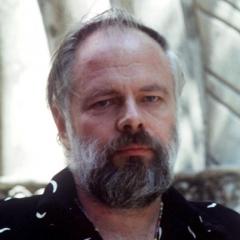
Philip K. Dick
Philip K. Dick was an American science fiction novelist known for his unique philosophical thinking and profound futuristic imagination. His works often explore the boundaries between individuals and society, reality and illusion, and have had a profound impact on science fiction literature. more
You May Also Like
Source: Ethics: Approaching Moral Decisions
Source: The Bondage of the Will
Source: The Bondage of the Will
Source: Forbidden Knowledge: Anti-Esoteric Polemics and Academic Research
“Don't you quit. You keep walking, you keep trying, there is help and happiness ahead.”
Source: I See London, I See France
“Normal is boring. Who wants that?”
Source: Don't Even Think About It
Source: Don't Even Think About It