“One night he sits up. In cots around him are a few dozen sick or wounded. A warm September wind pours across the countryside and sets the walls of the tent rippling. Werner’s head swivels lightly on his neck. The wind is strong and gusting stronger, and the corners of the tent strain against their guy ropes, and where the flaps at the two ends come up, he can see trees buck and sway. Everything rustles. Werner zips his old notebook and the little house into his duffel and the man beside him murmurs questions to himself and the rest of the ruined company sleeps. Even Werner’s thirst has faded. He feels only the raw, impassive surge of the moonlight as it strikes the tent above him and scatters. Out there, through the open flaps of the tent, clouds hurtle above treetops. Toward Germany, toward home. Silver and blue, blue and silver. Sheets of paper tumble down the rows of cots, and in Werner’s chest comes a quickening. He sees Frau Elena kneel beside the coal stove and bank up the fire. Children in their beds. Baby Jutta sleeps in her cradle. His father lights a lamp, steps into an elevator, and disappears. The voice of Volkheimer: What you could be. Werner’s body seems to have gone weightless under his blanket, and beyond the flapping tent doors, the trees dance and the clouds keep up their huge billowing march, and he swings first one leg and then the other off the edge of the bed. “Ernst,” says the man beside him. “Ernst.” But there is no Ernst; the men in the cots do not reply; the American soldier at the door of the tent sleeps. Werner walks past him into the grass. The wind moves through his undershirt. He is a kite, a balloon. Once, he and Jutta built a little sailboat from scraps of wood and carried it to the river. Jutta painted the vessel in ecstatic purples and greens, and she set it on the water with great formality. But the boat sagged as soon as the current got hold of it. It floated downstream, out of reach, and the flat black water swallowed it. Jutta blinked at Werner with wet eyes, pulling at the battered loops of yarn in her sweater. “It’s all right,” he told her. “Things hardly ever work on the first try. We’ll make another, a better one.” Did they? He hopes they did. He seems to remember a little boat—a more seaworthy one—gliding down a river. It sailed around a bend and left them behind. Didn’t it? The moonlight shines and billows; the broken clouds scud above the trees. Leaves fly everywhere. But the moonlight stays unmoved by the wind, passing through clouds, through air, in what seems to Werner like impossibly slow, imperturbable rays. They hang across the buckling grass. Why doesn’t the wind move the light? Across the field, an American watches a boy leave the sick tent and move against the background of the trees. He sits up. He raises his hand. “Stop,” he calls. “Halt,” he calls. But Werner has crossed the edge of the field, where he steps on a trigger land mine set there by his own army three months before, and disappears in a fountain of earth.”
Quote by Anthony Doerr
Work
All the Light We Cannot See
Browse quotes and source details for this work. more
Author
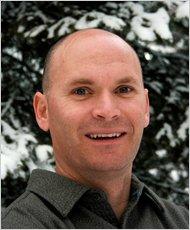
Anthony Doerr
Anthony Doerr is an American author of novels known for his delicate narrative and profound character development. His works often explore themes of history, memory, and human experience. Born on October 27, 1973, Doerr graduated from Yale University. His career began with writing short stories for The New Yorker, which later led to his long-form novel writing. more
You May Also Like
“Don't underestimate the poor, because his soul treasures to Phoenix of Wits”
Source: Poemas y canciones para el mal de amores Volumen1
Source: The Devil's Advocate
“We don't really know anything. Those who accept this are more likely to learn something.”
Source: The Complete Works: Essays, Travel Journal, Letters
Source: Why Can't We Just Get Along?: 6 Effective Skills for Dealing with Difficult People
Source: The Education of a Coach
Source: The Devil's Advocate
Source: কবি
Source: A Dance with Dragons