“What is the Ego? Suppose a man puts himself at a window to see those who pass by. If I pass by, can I say that he placed himself there to see me? No; for he does not think of me in particular. But does he who loves someone on account of beauty really love that person? No; for the small-pox, which will kill beauty without killing the person, will cause him to love her no more. And if one loves me for my judgment, memory, he does not love me, for I can lose these qualities without losing myself. Where, then, is this Ego, if it be neither in the body nor in the soul? And how love the body or the soul, except for these qualities which do not constitute me, since they are perishable? For it is impossible and would be unjust to love the soul of a person in the abstract, and whatever qualities might be therein. We never, then, love a person, but only qualities. Let us, then, jeer no more at those who are honoured on account of rank and office; for we love a person only on account of borrowed qualities.”
Quote by Blaise Pascal
Book:Pensées
Work
Author
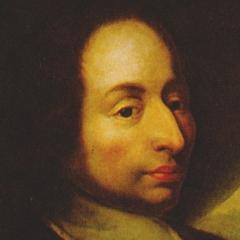
Blaise Pascal
Blaise Pascal was a French mathematician, physicist, philosopher, and theologian. He was born on June 19, 1623, and died on August 19, 1662. Pascal's contributions to mathematics were particularly significant, with groundbreaking work in probability theory, analytical geometry, and early calculus. more
You May Also Like
“We're all the same in the dark.”
Source: Renee and Jay
“Beauty is in the eye of the beholder; ugliness is in the personality of the beholden”
Source: Words to the Wise: A Medical-Philosophical Dictionary
Source: Pensées
Source: Appreciations, With an Essay on Style
Source: Meditations
Source: The Glass Castle