Quotessence
Home / Quotes / Quote by Wolfgang Pauli

Quote by Wolfgang Pauli

“When I die, my first question to the devil will be: What is the meaning of the fine structure constant?”

Quote by Wolfgang Pauli

Author
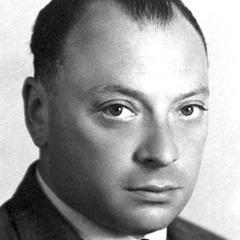
Wolfgang Pauli
Wolfgang Pauli

Wolfgang Pauli was a distinguished physicist born on April 25, 1900, and died on December 15, 1958. He is recognized for his substantial contributions to quantum mechanics, especially for the formulation of the Pauli exclusion principle. Pauli was awarded the Nobel Prize in Physics in 1945 for his work on the explanation of the fine structure of atomic spectra. more

You May Also Like

“One hundred thirty-seven is the inverse of something called the fine-structure constant. ...The most remarkable thing about this remarkable number is that it is dimension-free. ...Werner Heisenberg once proclaimed that all the quandaries of quantum mechanics would shrivel up when 137 was finally explained.”

“Highly complex numbers like the Comma of Pythagoras, Pi and Phi (sometimes called the Golden Proportion), are known as irrational numbers. They lie deep in the structure of the physical universe, and were seen by the Egyptians as the principles controlling creation, the principles by which matter is precipitated from the cosmic mind. Today scientists recognize the Comma of Pythagoras, Pi and the Golden Proportion as well as the closely related Fibonacci sequence are universal constants that describe complex patterns in astronomy, music and physics. ... To the Egyptians these numbers were also the secret harmonies of the cosmos and they incorporated them as rhythms and proportions in the construction of their pyramids and temples.”

“God is a pure mathematician!' declared British astronomer Sir James Jeans. The physical Universe does seem to be organised around elegant mathematical relationships. And one number above all others has exercised an enduring fascination for physicists: 137.0359991.... It is known as the fine-structure constant and is denoted by the Greek letter alpha (α).”

“Now let us analyze the other two occupants of the inner Sanctuary or Oracle. They are the two cherubim who guard the Ark ... [and] "The Molten Sea" ...There are also two other elements of the Temple of which they are the image, and these other two units are the Great Pyramid and the Inner Court (The Molten Sea = 137 = MG = Two Cherubim = Great Pyramid = Inner Court. All four of these elements are reflections of each other, and they constitute the real key to understanding the mystery of the Temple of Solomon. ..."The Ark of the Covenant of the Lord" [is] a mirror image of "The Great Pyramid of the Emperor" ....”

“A good example of the archetypal ideas which the archetypes produce are natural numbers or integers. With the aid of the integers the shaping and ordering of our experiences becomes exact. Another example is mathematical group theory. ...important applications of group theory are symmetries which can be found in most different connections both in nature and among the 'artifacts' produced by human beings. Group theory also has important applications in mathematics and mathematical physics. For example, the theory of elementary particles and their interactions can in essential respects be reduced to abstract symmetries. [The Message of the Atoms: Essays on Wolfgang Pauli and the Unspeakable]”

“The unsolved problems of the physical world now seem even more formidable than those solved in the twentieth century. Though in application it works splendidly, we do not even understand the physical meaning of quantum mechanics, much less how it might be united with general relativity. We don't know why the dimensionless constants (ratios of masses of elementary particles, ratios of strength of gravitational to electric forces, fine structure constant, etc.) have the values they do, unless we appeal to the implausible anthropic principle, which seems like a regression to Aristotelian teleology.”

“The power of the deductive network produced in physics has been illustrated in a delightful article by Victor F. Weisskopf. He begins by taking the magnitudes of six physical constants known by measurement: the mass of the proton, the mass and electric charge of the electron, the light velocity, Newton's gravitational constant, and the quantum of action of Planck. He adds three of four fundamental laws (e.g., de Broglie's relations connecting particle momentum and particle energy with the wavelength and frequency, and the Pauli exclusion principle), and shows that one can then derive a host of different, apparently quite unconnected, facts that happen to be known to us by observation separately ....”