Quotessence
Home / Quotes / Quote by Atul Gawande

Quote by Atul Gawande

Work

The Checklist Manifesto: How to Get Things Right

In The Checklist Manifesto, surgeon and public health researcher Atul Gawande argues that in an increasingly complex world, even experts can benefit from using checklists to manage tasks and avoid mistakes. Drawing on examples from surgery, aviation, and building construction, Gawande shows how checklists help ensure consistency, communication, and reliability in high-stakes environments. The book makes a case for embracing humility and systematic procedures to achieve better outcomes, without oversimplifying the challenges of professional work. more

Author
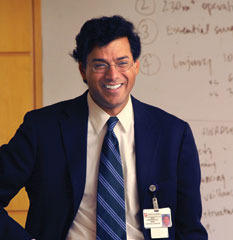
Atul Gawande
Atul Gawande

Atul Gawande is a renowned American surgeon and writer. Born on November 5, 1965, in Mumbai, India, he immigrated to the United States. Gawande is known for his expertise in surgery and his profound insights into the healthcare system. His writings cover a range of topics from surgical techniques to medical ethics, and have been well-received by readers. more

You May Also Like

“It has been long since thinking humanity has learnt that love is a majestic creation of the brain, yet that knowledge hasn’t made love be deemed any less glorious. Then why should it threaten the religious believer to learn that divinity as well is a natural creation of the brain!”

“India was and to some extent, still is, a nation where its citizens care more about their religious freedom than any other earthly possession. Give them food or not, it doesn’t matter to them, as long as they are allowed to practice their religion. But, take away their religion, they will fight till the last breath of their life.”

“Maybe there wasn't, after all, a clear motivation for any of the things that people did. Maybe they just did them for no reason at all or because of stupidity or selfishness or cowardice or anger or for reasons that made no rational sense - because the clouds happened to be a particularly gloomy shade of gray that day, because the barking of an old dog chained to a sycamore tree just happened to sound exactly like the crunch of soldiers' boots on gravel or the hum of bees like an engine in the head driving you mad.”

“It is argued that because they believed thoroughly in a just, moral God they could put their faith there and let the smaller securities take care of themselves. But I think that because they trusted themselves and respected themselves as individuals, because they know beyond doubt that they were valuable and potentially moral units - because of this they could give God their own courage and dignity and then receive it back.”

“A tudományos megismerés fejlődésével világunk egyre embertelenebbé válik. Az ember magányosnak érzi magát a világban, mivel kívül rekedt a természeten, és elveszítette a természet jelenségeivel való érzelmi "tudattalan azonosságát". A természeti jelenségek lassan elveszítették szimbolikus jelenségüket. A mennydörgés többé már nem a haragvó isten hangja, a villámlás sem az ő bosszúálló nyila. A folyóban nincs többé szellem, a fa már nem az ember életforrása, a kígyó nem a bölcsesség megtestesítője, a hegyi barlangban már nem laknak a hatalmas démonok. Nem szólnak az emberhez a kövek, növények és állatok, és az ember sem szól hozzájuk abban a hitben, hogy azok majd megértik őt. A természettel való kapcsolatát elveszítette, és ezzel együtt elveszett a szimbolikus kapcsolatból fakadó rejtett érzelmi energia is. Ezért a hatalmas veszteségért álmaink szimbólumai kárpótolnak. Felszínre hozzák eredeti természetünket - ösztöneinket és sajátságos gondolkodásunkat. Azonban álmaink, sajnálatos módon, a természet nyelvén fejezik ki közlendőiket, amely idegen és felfoghatatlan számunkra. Így mindez azzal a feladattal állít szembe benünket, hogy a modern beszéd racionális szavaira és fogalmaira fordítsuk le a természet nyelvét, olyan modern nyelvre, amely mentes a primitív kötöttségektől , nevezetesen az álomban megjelenő dolgokkal való participációtól.”