Quotessence
Home / Quotes / Quote by Virginia Woolf

Quote by Virginia Woolf

“The only advice, indeed, that one person can give another about reading is to take no advice, to follow your own instincts, to use your own reason, to come to your own conclusions. If this is agreed between us, then I feel at liberty to put forward a few ideas and suggestions because you will not allow them to fetter that independence which is the most important quality that a reader can possess. After all, what laws can be laid down about books? The battle of Waterloo was certainly fought on a certain day; but is Hamlet a better play than Lear? Nobody can say. Each must decide that question for himself. To admit authorities, however heavily furred and gowned, into our libraries and let them tell us how to read, what to read, what value to place upon what we read, is to destroy the spirit of freedom which is the breath of those sanctuaries. Everywhere else we may be bound by laws and conventions-there we have none.”

Quote by Virginia Woolf

Work

The Second Common Reader

Browse quotes and source details for this work. more

Author
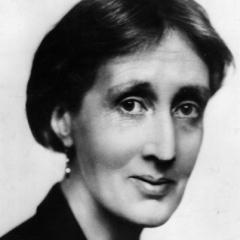
Virginia Woolf
Virginia Woolf

British modernist writer, known for her unique narrative techniques and profound portrayal of female experience. Her works include 'To the Lighthouse' and 'Mrs. Dalloway'. more

You May Also Like

“Marco’s heart swelled with pride at his culture. Maybe it was the coquito, but his eyes teared at this beautiful Reyes celebration, heavenly food, lush green mountains, clean air, and his family’s delighted faces. He felt sorry for the stiff people at the Casino de Puerto Rico, pretending to be jíbaros and eating food half as delicious as this. Actually, no. He didn’t feel sorry for them. It was precisely what they deserved.”

“Most gun control arguments miss the point. If all control boils fundamentally to force, how can one resist aggression without equal force? How can a truly “free” state exist if the individual citizen is enslaved to the forceful will of individual or organized aggressors? It cannot.”

“To criticize a person for their race is manifestly irrational and ridiculous, but to criticize their religion, that is a right. That is a freedom. The freedom to criticize ideas, any ideas - even if they are sincerely held beliefs - is one of the fundamental freedoms of society. A law which attempts to say you can criticize and ridicule ideas as long as they are not religious ideas is a very peculiar law indeed. It all points to the promotion of the idea that there should be a right not to be offended. But in my view the right to offend is far more important than any right not to be offended. The right to ridicule is far more important to society than any right not to be ridiculed because one in my view represents openness - and the other represents oppression”

“...new prejudices will serve as well as old ones to harness the great unthinking masses. For this enlightenment, however, nothing is required but freedom, and indeed the most harmless among all the things to which this term can properly be applied. It is the freedom to make public use of one's reason at every point. But I hear on all sides, 'Do not argue!' The Officer says: 'Do not argue but drill!' The tax collector: 'Do not argue but pay!' The cleric: 'Do not argue but believe!' Only one prince in the world says, 'Argue as much as you will, and about what you will, but obey!' Everywhere there is restriction on freedom.”

“When we read, we decide when, where, how long, and about what. One of the few places on earth that it is still possible to experience an instant sense of freedom and privacy is anywhere you open up a good book and begin to read. When we read silently, we are alone with our own thoughts and one other voice. We can take our time, consider, evaluate, and digest what we read—with no commercial interruptions, no emotional music or special effects manipulation. And in spite of the advances in electronic information exchange, the book is still the most important medium for presenting ideas of substance and value, still the only real home of literature.”