“Would you actually believe that you had committed your foolish acts in order to spare your son from committing them too? And could you in any way protect your son from Sansara? How could you? By means of teachings, prayer, admonition? My dear, have you entirely forgotten that story, that story containing so many lessons, that story about Siddhartha, a Brahman's son, which you once told me here on this very spot? Who has kept the Samana Siddhartha safe from Sansara, from sin, from greed, from foolishness? Were his father's religious devotion, his teachers warnings, his own knowledge, his own search able to keep him safe? Which father, which teacher had been able to protect him from living his life for himself, from soiling himself with life, from burdening himself with guilt, from drinking the bitter drink for himself, from finding his path for himself? Would you think, my dear, anybody might perhaps be spared from taking this path? That perhaps your little son would be spared, because you love him, because you would like to keep him from suffering and pain and disappointment? But even if you would die ten times for him, you would not be able to take the slightest part of his destiny upon yourself.”
Quote by Hermann Hesse
Book:Siddhartha
Work
Siddhartha
Hermann Hesse's 'Siddhartha' is a profound exploration of the human quest for enlightenment and self-discovery. The story follows the life of Siddhartha, a young Brahmin who leaves his family and societal expectations to seek truth and wisdom. His journey takes him through various experiences, including asceticism, wealth, and love, as he grapples with the complexities of life and the nature of reality. more
Author
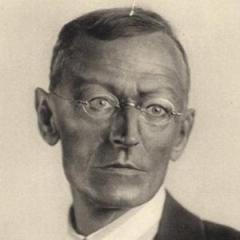
Hermann Hesse
Hermann Hesse was a German poet and novelist, born on July 2, 1877, and died on August 9, 1962. Known for his profound psychological descriptions and exploration of human nature, his works include classics such as 'Steppenwolf' and 'The Glass Bead Game'. more
You May Also Like
“God gave us free agency, and then gave us the commandments to keep us free.”
Source: Approaching Zion
Source: Ancillary Justice
Source: Does Your Bag Have Holes?: 24 Truths That Lead to Financial and Spiritual Freedom
Source: Contradictionary
Source: Siddhartha
Source: But for a Small Moment
Source: Gospel Ideals: Selections from the Discourses of David O. McKay
Source: The Exile