Quotessence
Home / Quotes / Quote by David Sheff

Quote by David Sheff

“Minoru and Yoko spent many evenings at video arcades. They looked over players' shoulders until it made young kids nervous. "What the fuck's your problem, mister?" one kid in a Kiss T-shirt barked at Minoru. Arakawa asked him, "Would you like a job?" He watched kids stand in front of the machines, transfixed, their hands melded to controllers, their bony arms like umbilical cords joining human and machine. He asked the kids questions about what made a game good. Arakawa realized that the most successful games had something the players couldn't articulate. The words used to describe them were those usually reserved to describe forms of intimacy between people. It was as if the players and the game itself somehow merged.”

Quote by David Sheff

Work

Game Over, Press Start to Continue: How Nintendo Conquered the World

Browse quotes and source details for this work. more

Author
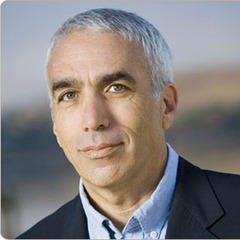
David Sheff
David Sheff

David Sheff is an American author recognized for his works on addiction and recovery. Born on December 23, 1955, he has written extensively on the subject of drug abuse, particularly focusing on the experiences of his son, Nic Sheff, who struggled with addiction. His books have received critical acclaim and have contributed significantly to the public discourse on addiction. more

You May Also Like

“Somewhat less appropriate was the blast that came from the loudspeaker, recently it had spoken on certain days, on others not at all, but always at the same time, as had been promised, clearly there was a timer in the transmitter which at the precise moment started up the recorded tape, the reason why it should have broken down from time to time we are never likely to know, these are matters for the outside world, it is in any case serious enough, insofar as it muddled up the calendar, the so-called counting of the days, which some blind men, natural obsessives, or lovers of order, which is a moderate form of obsession, had tried scrupulously to follow by making little knots in a piece of string...”

“In this connection I must mention too a not altogether rational idea which I had nourished more or less vaguely for a long time: the notion that before I could achieve greatness as a writer I would have to pass through some ordeal. For this ordeal I had waited in vain. Even total war (I was never in uniform) failed to ruffle my life. I seemed doomed to quietness.”

“Aşk nedir?” “Neymiş?” “Aşk, Füsun'un karayolları, kaldırımlar, evler, bahçeler ve odalarda gezinirken ve çay bahçelerinde, lokantalarda ve akşam yemeği sofrasında otururken, ona bakan Kemal'in duyduğu bağlılık duygusuna verilen addır.” “Hmmm… güzel cevap” derdi Füsun. “Beni görmediğin zaman aşk olmuyor mu?” “O zaman fena bir takıntı, bir hastalık oluyor.”

“Compañera usted sabe que puede contar conmigo no hasta dos o hasta diez sino contar conmigo si alguna vez advierte que la miro a los ojos y una veta de amor reconoce en los míos no alerte sus fusiles ni piense qué delirio a pesar de la veta o tal vez porque existe usted puede contar conmigo si otras veces me encuentra huraño sin motivo no piense qué flojera igual puede contar conmigo pero hagamos un trato yo quisiera contar con usted es tan lindo saber que usted existe uno se siente vivo y cuando digo esto quiero decir contar aunque sea hasta dos aunque sea hasta cinco no ya para que acuda presurosa en mi auxilio sino para saber a ciencia cierta que usted sabe que puede contar conmigo”

“Why did everyone become so obsessed with being 'perky', upbeat, and happy all the time? In our happiness-obsessive culture, even a lack of smile might cause people to think there is something wrong with you. What's worse is when we buy into it ourselves.”