Quotessence
Home / Quotes / Quote by Rebecca West

Quote by Rebecca West

“Allowed to cast themselves for great tragic roles, they were experiencing the exhilaration felt by great tragic actors. It was not lack of control, lack of taste, lack of knowledge that accounted for permission of what was not permitted in the West. Rather was it the reverse. Our people could not have handled patients full of the dangerous thoughts of death and love; these people had such resources that they did not need to empty their patients of such freight.”

Quote by Rebecca West

Work

Black Lamb and Grey Falcon

This book is a detailed account of the author's journey through the region, offering insights into the history, culture, and complexities of the Balkans. more

Author
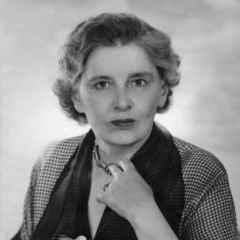
Rebecca West
Rebecca West

Rebecca West, born Cecil William James on December 21, 1892, and died on March 15, 1983, was a prominent British author of the 20th century. Known for her profound social insight and unique literary style, she left a lasting impact on the world of literature. more

You May Also Like

“One might go to the bakery, perhaps," he said. "But did you know the baker has tuberculosis? All the people here run around in a highly infectious state. The baker's daughter has tuberculosis too, it seems to have something to do with the runoff from the cellulose factory, with the steam that the locomotives have spewed out for decades, with the bad diet that people eat. Almost all of them have cankered lung lobes, pneumothorax and pneumoperitoneum are endemic. They have tuberculosis of the lungs, the head, the arms and legs. All of them have tubercular abscesses somewhere on their bodies. The valley is notorious for tuberculosis. You will find every form of it here: skin tuberculosis, brain tuberculosis, intestinal tuberculosis. Many cases of meningitis, which is deadly within hours. The workmen have tuberculosis from the dirt they dig around in, the farmers have it from their dogs and the infected milk. The majority of the people have galloping consumption. Moreover," he said, "the effect of the new drugs, of streptomycin for example, is nil. Did you know the knacker has tuberculosis? That the landlady has tuberculosis? That the landlady has tuberculosis? That her daughters have been to sanatoria on three occasions? Tuberculosis is by no means on the way out. People claim it is curable. but that's what the pharmaceutical industry says. In fact, tuberculosis is as incurable as it always was. Even people who have been inoculated against it come down with it. Often those who have it the worst are the ones who look so healthy that you wouldn't suspect they were ill at all. Their rosy faces are utterly at variance with their ravaged lungs. You keep running into people who've had to endure a cautery or, at the very least, a transverse lesion. Most of them have had their lives ruined by failed reconstructive surgery." We didn't go to the bakery. Straight home instead.”

“I know more about Emily Bronte than anyone I know. I know enough about her family to have been a part. I’ve walked with her on her damp luscious lonely moors, watched her strain to write on miniscule scraps of paper, seen her hide her works from prying eyes. I’ve brooded alongside her and participated in her taciturnity. Before her death at the ripe old age of 30, I nursed her from the things that ultimately killed her: tuberculosis with a side order of Victorian thinking.”

“Whatever it is you are really desiring, give it away. If it's companionship, give it to someone else, and just listen to them and be there. If it's money, give it to someone who is less fortunate. If it's encouragement, give it to others. If it's friendship, become the best friend you can be to others. If it's time, serve others with your time. You will be amazed to see how much more of everything you have when you are willing to freely give.”

“Not long ago I was much amused by imagining—what if the fancy suddenly took me to kill some one, a dozen people at once, or to do some thing awful, something considered the most awful crime in the world—what a predicament my judges would be in, with my having only a fortnight to live, now that corporal punishment and torture is abolished. I should die comfortably in hospital, warm aad snug, with an attentive doctor, and very likely much more snug and comfortable than at home. I wonder that the idea doesn't strike people in my position, if only as a joke.”

“Up to that time most of the Pimas and Maricopas wore long hair. One of the first steps towards their 'civilization' was to get them to cut their hair. Finding this a difficult problem, the agency offered a hat to anyone who cut his hair. ... The [United States government-run] agency had a hard time getting those Pimas to give up their olas-ki [round houses] to build and live in adobe houses. Adobe houses were supposed to be more civilized than the old arrow-weed shelters. But the Pimas did not want to change. So the agency issued a wagon to any Pima family who would build and live in an adobe house. The only thing was, they forgot to issue plans, so a Pima who wanted a free wagon built an adobe house according to his old ideas of a house, with a small door and no windows. These were warm on the few cold nights, but there was no ventilation. Some older people in my own family did what the agency told them to do. They built and lived in an adobe house. When they died they all died of tuberculosis. [pages 49 and 50, Progress]”