Quotessence
Home / Quotes / Quote by Nikos Kazantzakis

Quote by Nikos Kazantzakis

“I tried to establish order over the chaos of my imagination, but this essence, the same that presented itself to me still hazily when I was a child, has always struck me as the very heart of truth. It is our duty to set ourselves an end beyond our individual concerns, beyond our convenient, agreeable habits, higher than our own selves, and disdaining laughter, hunger, even death, to toil night and day to attain that end. No, not to attain it. The self-respecting soul, as soon as he reaches his goal, places it still further away. Not to attain it, but never to halt in the ascent. Only thus does life acquire nobility and oneness.”

Quote by Nikos Kazantzakis

Work

Report to Greco

This book is a fictional narrative that delves into the historical context of ancient Greece, focusing on the struggles and decisions of its characters amidst the backdrop of war and political intrigue. more

Author

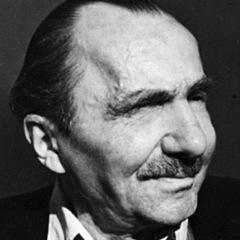
Nikos Kazantzakis
Nikos Kazantzakis

Nikos Kazantzakis, born on February 18, 1883, and died on October 26, 1957, was one of the most prominent Greek writers of the 20th century. Known for his profound exploration of human nature and philosophical thoughts, his works have transcended literature, philosophy, and religion. more

You May Also Like

“When a great multitude is making a pilgrimage, I should never advise him to do so, for as a rule people return on these occasions in a state of greater distraction than when they went. And many set out and make these pilgrimages for recreation rather than devotion.”

“They place more reliance upon methods and kinds of ceremony than upon the reality of their prayer, and herein they greatly offend and displease God. I refer, for example, to a Mass which is said with so many candles, neither more nor fewer; which is said by a priest in such and such a way; and must be at such and such an hour, neither sooner nor later; and the prayers and stations must be made at such time and with such ceremonies and in no other manner; and the person who makes them must have such qualities or qualifications. And there are those who think that if any of these details which they have laid down be wanting, nothing is accomplished. What is worse, and indeed intolerable, is that certain persons desire to feel some effect in themselves, or to have petitions fulfilled, or to know that the purpose of these ceremonious prayers of theirs will be accomplished. This is nothing less than to tempt God and to offend Him greatly, so much so that He sometimes gives leave for the devil to deceive them.”

“Pindar said, neither by land nor by sea shall you find us. Maybe you will have to fly to discover us. Or slither under the earth. Perhaps a great subterranean tunnel – the Underworld – will bring you to us. You must go down before you can come up. Katabasis, the going down, precedes anabasis, the going up. By the same token, the advance is followed by the retreat, the march forward so often turns into the march back. Even great Alexander learned that. Does descent precede ascent, or ascent precede descent?”

“It's because I haven't courage,' said Samuel. 'I could never quite take the responsibility. When the Lord God did not call my name, I might have called his name - but I did not. There you have the difference between greatness and mediocrity. It's not an uncommon disease. But it's nice for a mediocre man to know that greatness must be the loneliest state in the world.' 'I'd think there are degrees of greatness,' Adam said. 'I don't think so,' said Samuel. 'That would be like saying there is a little bigness. No. I believe when you come to that responsibility the hugeness and you are alone to make your choice. On one side you have warmth and companionship and sweet understanding, and on the other - cold, lonely greatness. There you make your choice. I'm glad I chose mediocrity, but how am I to say what reward might have come with the other? None of my children will be great either, except perhaps Tom. He's suffering over the choosing right now. It's a painful thing to watch. And somewhere in me I want him to say yes. Isn't that strange? A father to want his son condemned to greatness! What selfishness that must be.”