“It's because I haven't courage,' said Samuel. 'I could never quite take the responsibility. When the Lord God did not call my name, I might have called his name - but I did not. There you have the difference between greatness and mediocrity. It's not an uncommon disease. But it's nice for a mediocre man to know that greatness must be the loneliest state in the world.' 'I'd think there are degrees of greatness,' Adam said. 'I don't think so,' said Samuel. 'That would be like saying there is a little bigness. No. I believe when you come to that responsibility the hugeness and you are alone to make your choice. On one side you have warmth and companionship and sweet understanding, and on the other - cold, lonely greatness. There you make your choice. I'm glad I chose mediocrity, but how am I to say what reward might have come with the other? None of my children will be great either, except perhaps Tom. He's suffering over the choosing right now. It's a painful thing to watch. And somewhere in me I want him to say yes. Isn't that strange? A father to want his son condemned to greatness! What selfishness that must be.”
Quote by John Steinbeck
Book:East of Eden
Work
East of Eden
John Steinbeck's 'East of Eden' is a profound and complex narrative that delves into the lives of the Joad family as they navigate the challenges of their time. The story is rich with symbolism and philosophical musings, offering a rich tapestry of human emotions and societal struggles. more
Author
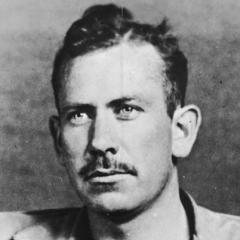
John Steinbeck
John Steinbeck was an American author renowned for his profound depiction of American society and the lives of farmers. His works often explore themes of poverty, social injustice, and human nature. Steinbeck was awarded the Nobel Prize in Literature in 1962 for his significant contribution to American literature. more
You May Also Like
Source: Born Ready: Unleash Your Inner Dream Girl
Source: East of Eden
Source: East of Eden
Source: East of Eden
Source: East of Eden
“Wherever there's hope there's a trial.”
Source: 1Q84
Source: East of Eden
“There's more beauty in the truth even if it is a dreadful beauty.”
Source: East of Eden