Quotessence
Home / Quotes / Quote by Charles Bukowski

Quote by Charles Bukowski

Author

Charles Bukowski
Charles Bukowski

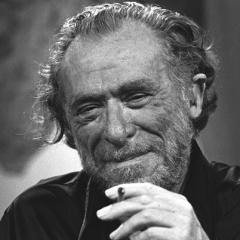
Charles Bukowski, born on August 16, 1920, was an influential American poet. Known for his unique style and profound depiction of the lives of the underclass in America, he is considered one of the representatives of the Beat Generation. more

You May Also Like

“When we are underconfident, we desire to be accepted unconditionally. That way no matter how much goes wrong and how little we accomplish, we are still guaranteed a place in society. Those who are so damaged in confidence and self-esteem that they assume they will never get anything right, and never accomplish anything of note, demand not only a place in society, but one equal to those who get things right and accomplish things. Although a defensive outlook, this viewpoint is projected forward as a pre-emptive strike on feelings of inadequacy, regret and doubt. When enough people gather who have this viewpoint, we create a society where social factors - being nice, novelty of approach, possessions owned, ironic or unusual lifestyles - become more important than ability. If you want to know how the path to Idiocracy is paved, this is it. Natural selection now favors the social, not the competent, and so society breeds future generations of incompetent (but very sociable) people.”

“When you are alone in the wilderness, opinions or beliefs of any kind are dropped as the absurd accoutrements they are. But after being in the wilderness for a while, you may come around to feeling sociable. Maybe you could try living in a community of “like-minded” social deviants. However, they had better be so alike that they are clones of one another or the day will come when someone steps over the line and factions begin to teem. Our brains will always discriminate—that is their nature. They fix on superficial differences we spy in one another, redundantly speaking, since all differences among us are superficial.”

“Models of leader attributes that dominated in the early part of the 20th century emphasized leader traits. Several surveys and reviews of this literature identified a number of dispositional qualities that distinguished leaders from nonleaders, including intelligence, originality, dependability, initiative, desire to excel, sociability, adaptability, extroversion, and dominance. However, no single personal quality was strongly and consistently correlated with leadership.”

“[Networking] feels fake because we know it involves the deflection of our natural human sociability to an ulterior end. Normally we meet strangers in the expectation that they may truly be strange, and are drawn to the multilayered mystery that each human presents. But in networking, as in prostitution, there is no time for fascination. The networker is always, so to speak, looking over the shoulder of the person she engages in conversation, toward whatever concrete advantage can be gleaned from the interaction—a tip or a precious contact.”